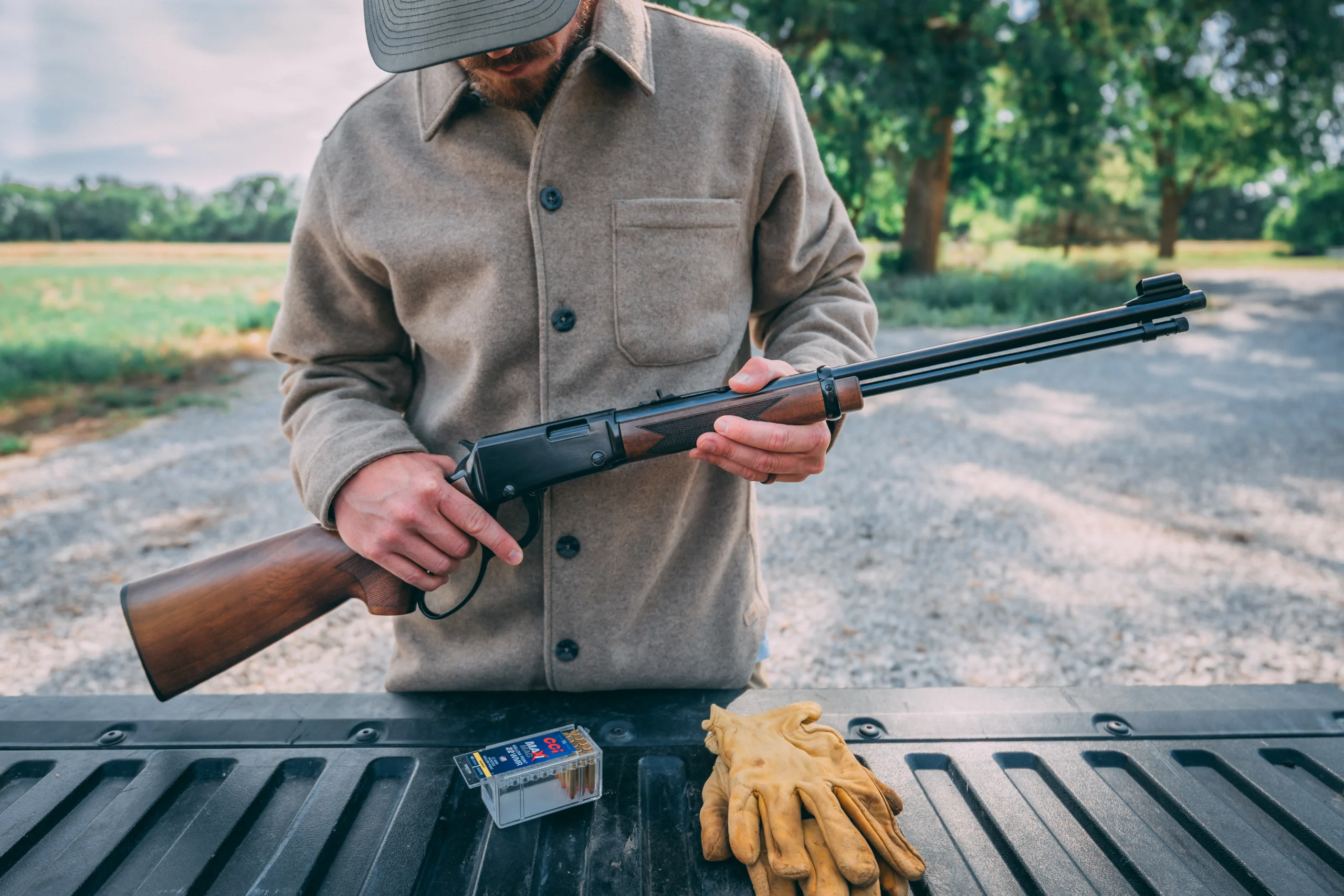
How To Think About Caliber Before You Buy
Three questions matter more than any spec sheet:
- What are you loading it for? Small game, deer, hogs, elk, home defense, target shooting, or just the pleasure of working a Henry lever action on a Saturday afternoon. The answer narrows the field fast.
- Do you want your rifle ammo to double with a handgun you already own? A lot of shooters build around this on purpose. Load .357 Mag into a revolver and a rifle, and you’re carrying one type of ammunition instead of two.
- What’s your recoil ceiling? Be honest with yourself here. A rifle that kicks too hard to shoot comfortably gets left in the safe, and a gun in the safe doesn’t put meat in the freezer or protect anybody.
Answer those three, and the rest of this guide does the sorting for you.
Rimfire: The Entry Point

We chamber three rimfire cartridges. Each one sits at a different point on the same scale: cost per round, recoil, and how far out you can reach with confidence. Most first-time buyers start here, which is why a .22 lever gun has been the rifle a father hands his kid for longer than anybody can remember.
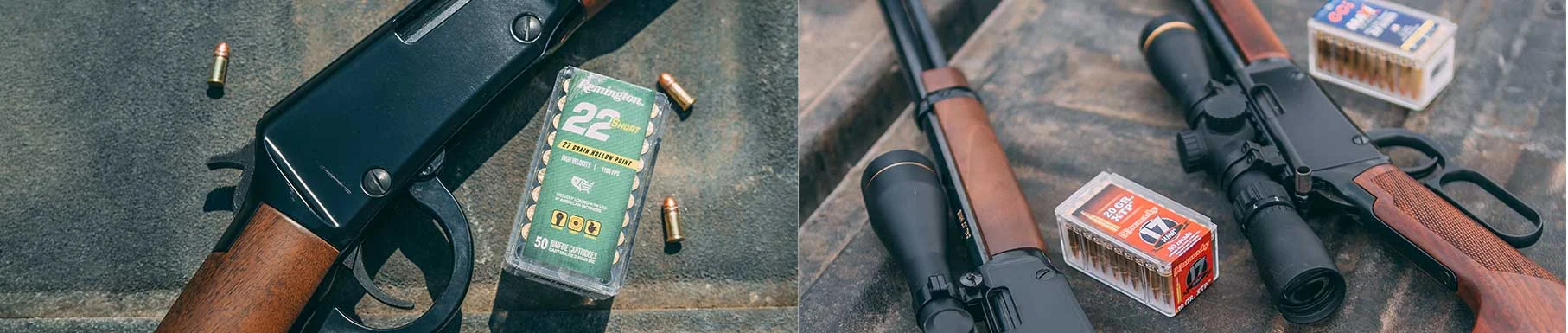
.22 S/L/LRThis is the round more Henry owners have fired than any other, and for good reason. The .22 Short, Long, and Long Rifle family runs through the Golden Boy, the H1 Classic, the H1 Frontier, and the H1 Western lines, and it does the job a first rifle needs to do.
Recoil is close to nothing. Ammunition costs pennies a round. A box lasts an afternoon of plinking, and nobody’s shoulder is sore at the end of it.
- Best for: First-time shooters, small game, all-day plinking
- Pros: Minimal recoil, the cheapest ammunition in the lineup, easy to learn on at any age
- Not ideal for: Deer-sized game, personal defense
This is the round more Henry owners have fired than any other, and for good reason. The .22 Short, Long, and Long Rifle family runs through the Golden Boy, the H1 Classic, the H1 Frontier, and the H1 Western lines, and it does the job a first rifle needs to do.
Recoil is close to nothing. Ammunition costs pennies a round. A box lasts an afternoon of plinking, and nobody’s shoulder is sore at the end of it.
- Best for: First-time shooters, small game, all-day plinking
- Pros: Minimal recoil, the cheapest ammunition in the lineup, easy to learn on at any age
- Not ideal for: Deer-sized game, personal defense
.22 WMRStep up from .22 LR, and you land on .22 Magnum, chambered in the H1 Sporter, H1 Frontier, and H1 Tracker. It carries more energy and holds velocity better past 75 yards, which matters if you’re after coyotes, groundhogs, or anything bigger than a squirrel that still doesn’t justify a centerfire rifle.
Recoil stays mild here, and cost per round climbs above .22 LR, but not by much.
- Best for: Varmint and pest control beyond .22 LR range
- Pros: More energy and reach than .22 LR, still mild recoil
- Not ideal for: Big game, long-range precision work
Step up from .22 LR, and you land on .22 Magnum, chambered in the H1 Sporter, H1 Frontier, and H1 Tracker. It carries more energy and holds velocity better past 75 yards, which matters if you’re after coyotes, groundhogs, or anything bigger than a squirrel that still doesn’t justify a centerfire rifle.
Recoil stays mild here, and cost per round climbs above .22 LR, but not by much.
- Best for: Varmint and pest control beyond .22 LR range
- Pros: More energy and reach than .22 LR, still mild recoil
- Not ideal for: Big game, long-range precision work
.17 HMRThe .17 HMR pushes a tiny, fast bullet on a flat trajectory, which makes it the go-to pick for varmint hunters who want to hold dead-on out past 100 yards without doing trajectory math in their head.
The H1 Sporter and H1 Frontier both chamber it.
Wind drifts a lighter bullet more than a heavier one, so this round rewards calm days and a steady rest more than the .22 Magnum does. It’s not the caliber for everybody, and it was never meant to be.
- Best for: Varmint hunting at extended range
- Pros: Flat trajectory, very light recoil, excellent accuracy
- Not ideal for: Windy conditions, anything larger than varmints
The .17 HMR pushes a tiny, fast bullet on a flat trajectory, which makes it the go-to pick for varmint hunters who want to hold dead-on out past 100 yards without doing trajectory math in their head.
The H1 Sporter and H1 Frontier both chamber it.
Wind drifts a lighter bullet more than a heavier one, so this round rewards calm days and a steady rest more than the .22 Magnum does. It’s not the caliber for everybody, and it was never meant to be.
- Best for: Varmint hunting at extended range
- Pros: Flat trajectory, very light recoil, excellent accuracy
- Not ideal for: Windy conditions, anything larger than varmints
Straight-Wall and Pistol-Caliber Lever Guns

This is the category built for the revolver in your safe. Most of these calibers come in both rifle and handgun versions, so one box of ammunition can feed two guns.
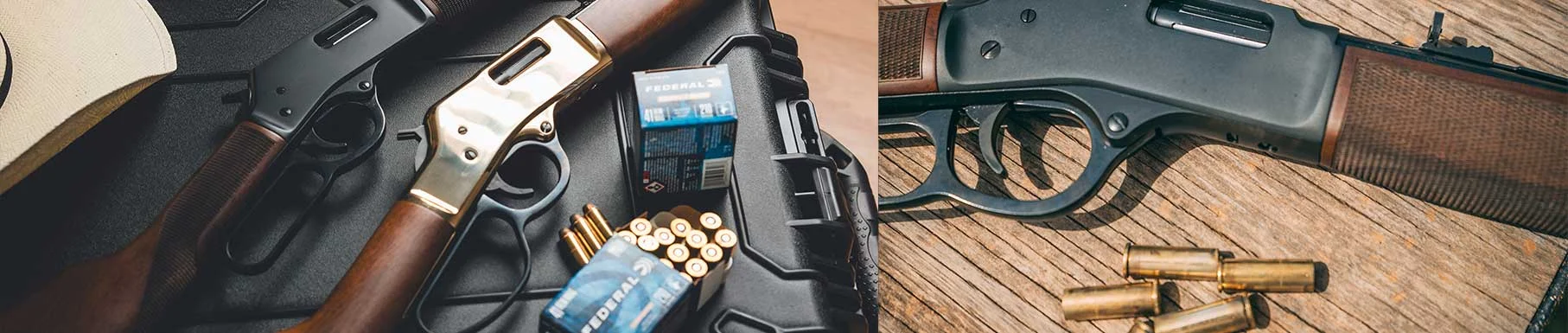
.357 Mag/.38 SplThis is the round built for the shooter who wants one type of ammunition that’s able to do two jobs. Load .357 Magnum, or drop down to the milder .38 Special, and the same box works in the Henry Big Boy rifle and a matching revolver. The Big Boy family and the H12 Explorer Carbine both chamber it.
Recoil sits in comfortable territory even with full-power .357 loads, and .38 Special drops it further for new shooters or anyone working on fundamentals. Effective range runs out around 100 yards for deer-sized game, which covers most brush and woods hunting without asking the cartridge to do more than it should. It’s earned its keep in more deer camps and more nightstands than almost any other round we chamber.
- Best for: Deer-sized game at close range, home defense, dual-caliber setups with a revolver
- Pros: Shares ammunition with a matching revolver, manageable recoil, drop to .38 Special for lighter practice rounds
- Not ideal for: Long-range hunting
This is the round built for the shooter who wants one type of ammunition that’s able to do two jobs. Load .357 Magnum, or drop down to the milder .38 Special, and the same box works in the Henry Big Boy rifle and a matching revolver. The Big Boy family and the H12 Explorer Carbine both chamber it.
Recoil sits in comfortable territory even with full-power .357 loads, and .38 Special drops it further for new shooters or anyone working on fundamentals. Effective range runs out around 100 yards for deer-sized game, which covers most brush and woods hunting without asking the cartridge to do more than it should. It’s earned its keep in more deer camps and more nightstands than almost any other round we chamber.
- Best for: Deer-sized game at close range, home defense, dual-caliber setups with a revolver
- Pros: Shares ammunition with a matching revolver, manageable recoil, drop to .38 Special for lighter practice rounds
- Not ideal for: Long-range hunting
.44 Mag/.44 SplMove up to .44 Magnum, and you’re carrying serious knockdown power for deer and hogs at the ranges lever guns get used at the most. The Big Boy Carbine and H12 Explorer Carbine both chamber it, and both let you drop to .44 Special for a softer-shooting round on the same rifle. That flexibility matters for anyone who wants one gun to handle a full-power hunting load and a lighter practice round.
Recoil runs noticeably harder than .357, though most shooters find it manageable in a rifle-length gun with a good stock. Ammunition costs more per box than .357, which adds up if you shoot high volume.
- Best for: Deer and hogs at close to moderate range, dual-caliber setups with a heavier revolver
- Pros: Serious stopping power, drop to .44 Special for a softer-shooting practice round, proven in the field
- Not ideal for: Recoil-sensitive shooters, long-range work
Move up to .44 Magnum, and you’re carrying serious knockdown power for deer and hogs at the ranges lever guns get used at the most. The Big Boy Carbine and H12 Explorer Carbine both chamber it, and both let you drop to .44 Special for a softer-shooting round on the same rifle. That flexibility matters for anyone who wants one gun to handle a full-power hunting load and a lighter practice round.
Recoil runs noticeably harder than .357, though most shooters find it manageable in a rifle-length gun with a good stock. Ammunition costs more per box than .357, which adds up if you shoot high volume.
- Best for: Deer and hogs at close to moderate range, dual-caliber setups with a heavier revolver
- Pros: Serious stopping power, drop to .44 Special for a softer-shooting practice round, proven in the field
- Not ideal for: Recoil-sensitive shooters, long-range work
.45 ColtA cowboy-action and traditionalist favorite, chambered in the H12 Color Case Hardened and H12 All-Weather rifles. Ballistically, it sits close to .44 Special, mild enough for extended range sessions, authoritative enough for deer at moderate distance.
If you already carry a .45 Colt revolver, or you’re building a period-correct western rig, this is the caliber that completes the picture. It’s a rifle built to look the part and shoot the part both.
- Best for: Cowboy-action competition, period-correct western builds, deer at moderate range
- Pros: Mild recoil, pairs with a .45 Colt revolver, classic look and feel
- Not ideal for: Long-range hunting
A cowboy-action and traditionalist favorite, chambered in the H12 Color Case Hardened and H12 All-Weather rifles. Ballistically, it sits close to .44 Special, mild enough for extended range sessions, authoritative enough for deer at moderate distance.
If you already carry a .45 Colt revolver, or you’re building a period-correct western rig, this is the caliber that completes the picture. It’s a rifle built to look the part and shoot the part both.
- Best for: Cowboy-action competition, period-correct western builds, deer at moderate range
- Pros: Mild recoil, pairs with a .45 Colt revolver, classic look and feel
- Not ideal for: Long-range hunting
.41 MagnumThe overlooked middle ground between .357 and .44 Magnum. Not as many rifles chamber it, but for a shooter who wants more authority than .357 Magnum without going all the way up to .44 Magnum’s recoil, .41 Magnum splits the difference between them.
This caliber is worth a look if you already own a .41 Magnum revolver and want the rifle to match. Ask around long enough, and you’ll find a shooter who swears by it above everything else.
- Best for: Shooters who want more punch than .357 without .44 Magnum recoil
- Pros: Middle-ground stopping power, pairs naturally with a .41 Magnum revolver
- Not ideal for: Shooters who prioritize widely available ammunition
The overlooked middle ground between .357 and .44 Magnum. Not as many rifles chamber it, but for a shooter who wants more authority than .357 Magnum without going all the way up to .44 Magnum’s recoil, .41 Magnum splits the difference between them.
This caliber is worth a look if you already own a .41 Magnum revolver and want the rifle to match. Ask around long enough, and you’ll find a shooter who swears by it above everything else.
- Best for: Shooters who want more punch than .357 without .44 Magnum recoil
- Pros: Middle-ground stopping power, pairs naturally with a .41 Magnum revolver
- Not ideal for: Shooters who prioritize widely available ammunition
.327 Federal Magnum / .32 H&R MagnumThe lightest-recoiling round in the pistol-caliber lineup. .327 Federal Magnum runs mild enough for new shooters and anyone managing joint pain or recoil sensitivity, while still outperforming .22 Magnum on stopping power for small predators and pest control.
If you pair it with a .327-chambered revolver, you’ve put together a low-recoil, dual-caliber setup from the ground up. Don’t let the size fool you.
- Best for: New or recoil-sensitive shooters, small predator and pest control
- Pros: Lightest recoil in the pistol-caliber lineup, outperforms .22 Magnum on stopping power, pairs with a matching revolver
- Not ideal for: Deer-sized game or larger
The lightest-recoiling round in the pistol-caliber lineup. .327 Federal Magnum runs mild enough for new shooters and anyone managing joint pain or recoil sensitivity, while still outperforming .22 Magnum on stopping power for small predators and pest control.
If you pair it with a .327-chambered revolver, you’ve put together a low-recoil, dual-caliber setup from the ground up. Don’t let the size fool you.
- Best for: New or recoil-sensitive shooters, small predator and pest control
- Pros: Lightest recoil in the pistol-caliber lineup, outperforms .22 Magnum on stopping power, pairs with a matching revolver
- Not ideal for: Deer-sized game or larger
.44-40 WCFFew cartridges carry more American history than this one. This is the cartridge that built the Old West reputation for the lever gun, and it lives on in the New Original Henry rifles: the H11 rifle, the H11 Rare Carbine, and the H11 Iron Frame Rifle.
If you’re drawn to the brass-and-walnut original Henry design rather than a modern Big Boy, .44-40 is the caliber that keeps the whole build historically genuine.
- Best for: Cowboy-action competition, period-correct Old West builds
- Pros: Deep historical pedigree, pairs with the New Original Henry rifles, mild recoil
- Not ideal for: Long-range hunting, modern tactical use
Few cartridges carry more American history than this one. This is the cartridge that built the Old West reputation for the lever gun, and it lives on in the New Original Henry rifles: the H11 rifle, the H11 Rare Carbine, and the H11 Iron Frame Rifle.
If you’re drawn to the brass-and-walnut original Henry design rather than a modern Big Boy, .44-40 is the caliber that keeps the whole build historically genuine.
- Best for: Cowboy-action competition, period-correct Old West builds
- Pros: Deep historical pedigree, pairs with the New Original Henry rifles, mild recoil
- Not ideal for: Long-range hunting, modern tactical use
Classic Deer-Rifle Calibers

Three calibers carry the weight of tradition in this group, each one proven in the woods long before anybody worried about spec sheets. These are the rounds your grandfather likely carried, and in most cases, they still do the job as well as anything new out on the market.
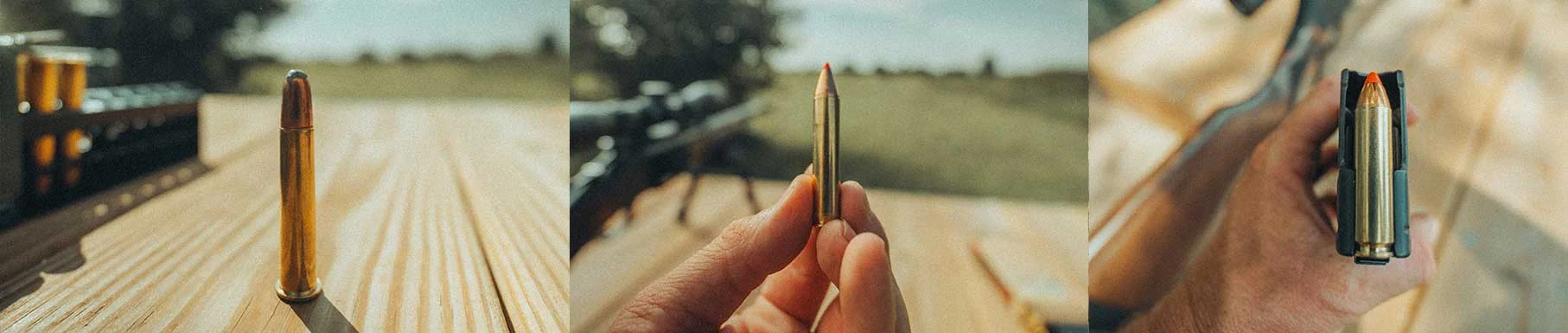
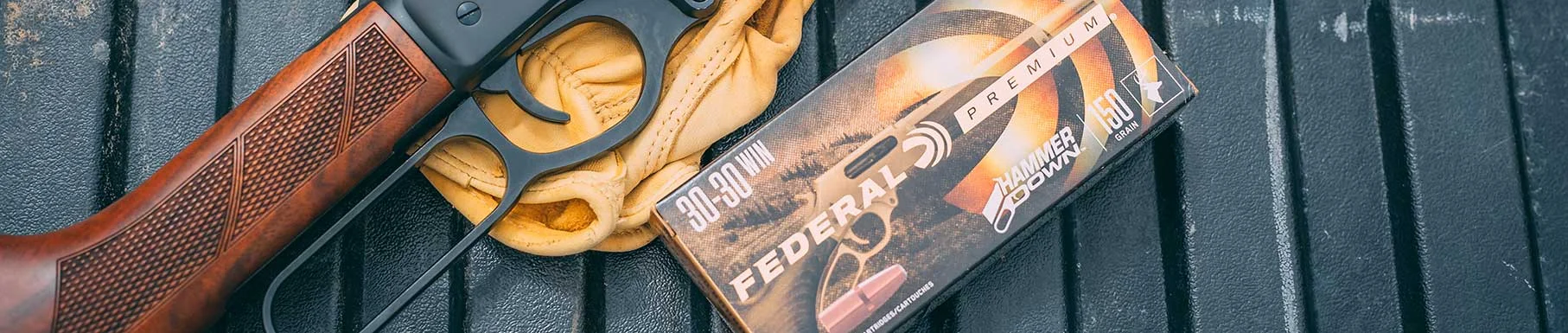
.30-30 WinchesterNo caliber is more interchangeable with the lever action rifle than .30-30, and Henry chambers it across more rifles than almost any other round in the lineup: the Big Boy, the H9 X Model, the Color Case Hardened, the All-Weather, and the Explorer Carbine.
This is the round that built deer camp across most of America, trusted at woods and brush ranges, typically inside 150 yards, with enough energy to put a whitetail down cleanly and recoil mild enough to shoot all day at the range.
If you only own one centerfire lever gun, there’s a strong argument it should be chambered in .30-30. Ammunition is everywhere, prices stay reasonable, and the round has a hundred and thirty years of field results behind it.
- Best for: Whitetail deer hunting in woods and brush country
- Pros: Over a century of proven performance, widely available and affordable ammunition, mild recoil
- Not ideal for: Shots past 150 yards
No caliber is more interchangeable with the lever action rifle than .30-30, and Henry chambers it across more rifles than almost any other round in the lineup: the Big Boy, the H9 X Model, the Color Case Hardened, the All-Weather, and the Explorer Carbine.
This is the round that built deer camp across most of America, trusted at woods and brush ranges, typically inside 150 yards, with enough energy to put a whitetail down cleanly and recoil mild enough to shoot all day at the range.
If you only own one centerfire lever gun, there’s a strong argument it should be chambered in .30-30. Ammunition is everywhere, prices stay reasonable, and the round has a hundred and thirty years of field results behind it.
- Best for: Whitetail deer hunting in woods and brush country
- Pros: Over a century of proven performance, widely available and affordable ammunition, mild recoil
- Not ideal for: Shots past 150 yards
.35 RemingtonThe .35 Remington is a brush-gun caliber with a smaller but loyal following. It hits harder than .30-30 at close, thick-cover ranges where lever guns earn their keep, and it’s chambered in the H9 Provider Rifle.
This one is worth considering if you hunt in dense terrain where shots rarely stretch past 100 yards and you want more bullet weight behind them.
- Best for: Deer hunting in thick, close-range cover
- Pros: Hits harder than .30-30 at close range, proven brush-gun performance
- Not ideal for: Long-range shots, hunters who want widely stocked ammunition
The .35 Remington is a brush-gun caliber with a smaller but loyal following. It hits harder than .30-30 at close, thick-cover ranges where lever guns earn their keep, and it’s chambered in the H9 Provider Rifle.
This one is worth considering if you hunt in dense terrain where shots rarely stretch past 100 yards and you want more bullet weight behind them.
- Best for: Deer hunting in thick, close-range cover
- Pros: Hits harder than .30-30 at close range, proven brush-gun performance
- Not ideal for: Long-range shots, hunters who want widely stocked ammunition
.38-55 WinchesterThe .38-55 predates the .30-30 and carries a similar reputation among traditionalists who want a heavier, slower bullet moving through thick cover. It’s not a caliber most first-time buyers seek out, but a real option for hunters who already know why they want it. These are rounds for a hunter who has made up their mind, and not shopping for a sales pitch.
- Best for: Traditionalist hunters in thick, close-range cover
- Pros: Heavier, slower bullet with a long field history
- Not ideal for: Long-range shots, first-time buyers seeking common ammunition
The .38-55 predates the .30-30 and carries a similar reputation among traditionalists who want a heavier, slower bullet moving through thick cover. It’s not a caliber most first-time buyers seek out, but a real option for hunters who already know why they want it. These are rounds for a hunter who has made up their mind, and not shopping for a sales pitch.
- Best for: Traditionalist hunters in thick, close-range cover
- Pros: Heavier, slower bullet with a long field history
- Not ideal for: Long-range shots, first-time buyers seeking common ammunition
Straight-Wall Cartridges for Restricted States

A growing number of states limit deer hunting in certain zones to only straight-wall cartridges. The rule exists because straight-wall rounds generally carry a shorter effective range, which state wildlife agencies use to manage safety in areas too populated or too close to other hunters for a longer-reaching bottlenecked rifle. If you hunt in one of these zones, always be sure to check your state’s regulations before you buy. We built three calibers specifically for this situation, because a hunter in one of these states deserves a lever gun with real authority behind it.
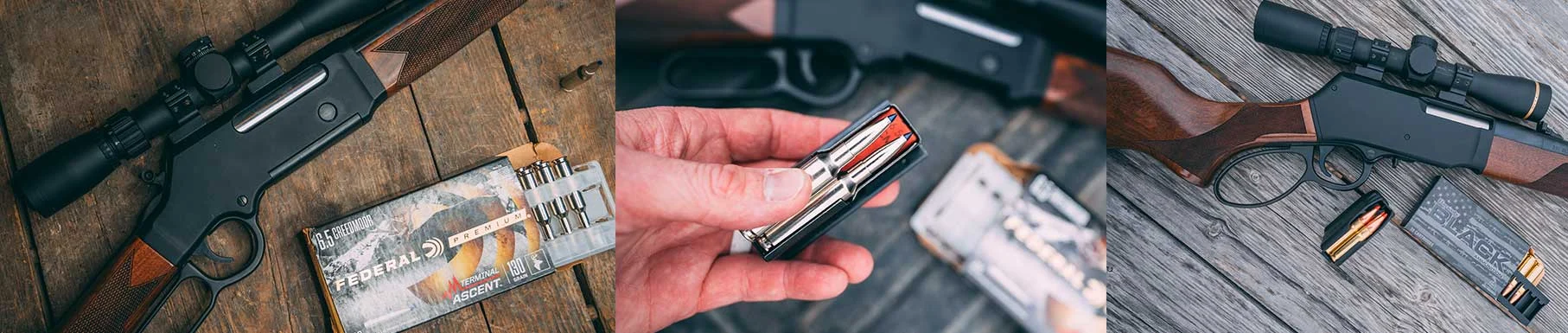
.360 BuckhammerDeveloped with Remington, .360 Buckhammer is built for straight-wall zones, and it delivers a more powerful punch than .30-30 out of a similarly weighted rifle while staying gentler on the shoulder than a warm .45-70 load.
It’s chambered in the H9 Explorer Carbine, H9 Protector Carbine, and H9 X Model.
For hunters in a straight-wall state who don’t want to give up stopping power on deer, bear, or hogs, this is the round built for that exact problem.
- Best for: Deer, bear, and hogs in straight-wall-restricted states
- Pros: More punch than .30-30, gentler recoil than .45-70, purpose-built for straight-wall regulations
- Not ideal for: Long-range precision shooting
Developed with Remington, .360 Buckhammer is built for straight-wall zones, and it delivers a more powerful punch than .30-30 out of a similarly weighted rifle while staying gentler on the shoulder than a warm .45-70 load.
It’s chambered in the H9 Explorer Carbine, H9 Protector Carbine, and H9 X Model.
For hunters in a straight-wall state who don’t want to give up stopping power on deer, bear, or hogs, this is the round built for that exact problem.
- Best for: Deer, bear, and hogs in straight-wall-restricted states
- Pros: More punch than .30-30, gentler recoil than .45-70, purpose-built for straight-wall regulations
- Not ideal for: Long-range precision shooting
.350 LegendA lighter-recoiling straight-wall option, chambered in the H15 Single Shot Rifle. It’s a natural fit for recoil-sensitive or new hunters who need a straight-wall-legal round without the recoil of .360 Buckhammer or .450 Bushmaster.
- Best for: Recoil-sensitive or new hunters in straight-wall states
- Pros: Light recoil, straight-wall legal, easy to shoot accurately
- Not ideal for: Larger big-game species, long-range shooting
A lighter-recoiling straight-wall option, chambered in the H15 Single Shot Rifle. It’s a natural fit for recoil-sensitive or new hunters who need a straight-wall-legal round without the recoil of .360 Buckhammer or .450 Bushmaster.
- Best for: Recoil-sensitive or new hunters in straight-wall states
- Pros: Light recoil, straight-wall legal, easy to shoot accurately
- Not ideal for: Larger big-game species, long-range shooting
.450 BushmasterThe heaviest hitter in the straight-wall category, chambered in the H23 Lever Action Supreme Rifle. Originally developed for AR-platform rifles, .450 Bushmaster carries serious energy at the moderate ranges straight-wall hunting calls for, making it the pick for hunters who want maximum authority within a straight-wall-legal cartridge.
- Best for: Maximum stopping power in straight-wall-restricted states
- Pros: Heaviest-hitting straight-wall option, proven AR-platform pedigree
- Not ideal for: Recoil-sensitive shooters, long-range precision shooting
The heaviest hitter in the straight-wall category, chambered in the H23 Lever Action Supreme Rifle. Originally developed for AR-platform rifles, .450 Bushmaster carries serious energy at the moderate ranges straight-wall hunting calls for, making it the pick for hunters who want maximum authority within a straight-wall-legal cartridge.
- Best for: Maximum stopping power in straight-wall-restricted states
- Pros: Heaviest-hitting straight-wall option, proven AR-platform pedigree
- Not ideal for: Recoil-sensitive shooters, long-range precision shooting
Big Game and Heavy Hitters
One caliber owns this category outright, and it has for well over a century.
.45-70 Gov’tThe .45-70 Government is where the Henry lineup peaks in raw stopping power. It’s chambered across the widest range of large-frame rifles in the catalog: the H10 Big Boy, All-Weather, H10 Color Case Hardened, X Model, Explorer Carbine, and both the Brass and Steel Wildlife Editions.
This cartridge dates back to 1873. It went west with the buffalo hunters and the cavalry, and it’s never needed an update to stay relevant. Modern loadings push well past what the original black-powder rounds could do, giving today’s .45-70 rifles real reach and penetration for the largest game in North America, and for hunters and ranchers who need a rifle capable of stopping a bear at close range.
Recoil is intense, especially with full-power loads, so it’s not the caliber for a recoil-sensitive shooter’s first lever gun. It’s the caliber for the hunter who already knows they need this much gun.
- Best for: Elk, moose, bison, and dangerous-game defense at close range
- Pros: Unmatched stopping power in the lineup, chambered across the widest range of large-frame rifles, over 150 years of proven performance
- Not ideal for: Recoil-sensitive shooters, long-range shooting, a first lever gun
The .45-70 Government is where the Henry lineup peaks in raw stopping power. It’s chambered across the widest range of large-frame rifles in the catalog: the H10 Big Boy, All-Weather, H10 Color Case Hardened, X Model, Explorer Carbine, and both the Brass and Steel Wildlife Editions.
This cartridge dates back to 1873. It went west with the buffalo hunters and the cavalry, and it’s never needed an update to stay relevant. Modern loadings push well past what the original black-powder rounds could do, giving today’s .45-70 rifles real reach and penetration for the largest game in North America, and for hunters and ranchers who need a rifle capable of stopping a bear at close range.
Recoil is intense, especially with full-power loads, so it’s not the caliber for a recoil-sensitive shooter’s first lever gun. It’s the caliber for the hunter who already knows they need this much gun.
- Best for: Elk, moose, bison, and dangerous-game defense at close range
- Pros: Unmatched stopping power in the lineup, chambered across the widest range of large-frame rifles, over 150 years of proven performance
- Not ideal for: Recoil-sensitive shooters, long-range shooting, a first lever gun
Modern Centerfire and Detachable-Magazine Rifles

The Henry Long Ranger and H23 LASR platforms use detachable box magazines instead of the tube magazines found on classic lever guns, opening the door to spitzer bullets and calibers suited for longer range. This is the part of the lineup most caliber guides skip, and it’s where we compete directly with bolt-action hunting rifles instead of other lever guns.

.223 Remington / 5.56 NATOChambered in the H23 LASR and across the H14 Long Ranger family, including the Express Carbine, Deluxe, and Wildlife Edition, .223 Rem/5.56 NATO is a predator and varmint round through and through. Flat trajectory, mild recoil, and widely available ammunition make it a strong choice for coyote and predator control, especially for shooters who already run an AR-platform rifle in the same chambering and want to share ammunition between the two.
- Best for: Predator and varmint control
- Pros: Flat trajectory, mild recoil, shares ammunition with AR-platform rifles
- Not ideal for: Big game, close-range stopping power
Chambered in the H23 LASR and across the H14 Long Ranger family, including the Express Carbine, Deluxe, and Wildlife Edition, .223 Rem/5.56 NATO is a predator and varmint round through and through. Flat trajectory, mild recoil, and widely available ammunition make it a strong choice for coyote and predator control, especially for shooters who already run an AR-platform rifle in the same chambering and want to share ammunition between the two.
- Best for: Predator and varmint control
- Pros: Flat trajectory, mild recoil, shares ammunition with AR-platform rifles
- Not ideal for: Big game, close-range stopping power
.300 BlackoutAlso chambered in the H23 LASR, .300 Blackout trades reach for close-range terminal performance and suppressor compatibility. If you’re hunting hogs or predators at close range, especially at night with a suppressed setup, this caliber fits that use case better than .223.
- Best for: Close-range hog and predator hunting, suppressed setups
- Pros: Strong close-range terminal performance, suppressor-friendly
- Not ideal for: Long-range shooting
Also chambered in the H23 LASR, .300 Blackout trades reach for close-range terminal performance and suppressor compatibility. If you’re hunting hogs or predators at close range, especially at night with a suppressed setup, this caliber fits that use case better than .223.
- Best for: Close-range hog and predator hunting, suppressed setups
- Pros: Strong close-range terminal performance, suppressor-friendly
- Not ideal for: Long-range shooting
.243 WinchesterA genuine all-around round, chambered in the H14 Long Ranger, Long Ranger Deluxe, and Long Ranger Wildlife Edition, as well as the H15 Single Shot Youth Rifle. .243 handles varmints without excessive pelt damage and doubles as a legitimate deer round for hunters who prefer lighter recoil over raw power. It’s a common first centerfire rifle for younger or new hunters for exactly this reason.
- Best for: Varmints and deer, especially for younger or new hunters
- Pros: Light recoil, minimal pelt damage on varmints, doubles as a legitimate deer round
- Not ideal for: Large or dangerous game
A genuine all-around round, chambered in the H14 Long Ranger, Long Ranger Deluxe, and Long Ranger Wildlife Edition, as well as the H15 Single Shot Youth Rifle. .243 handles varmints without excessive pelt damage and doubles as a legitimate deer round for hunters who prefer lighter recoil over raw power. It’s a common first centerfire rifle for younger or new hunters for exactly this reason.
- Best for: Varmints and deer, especially for younger or new hunters
- Pros: Light recoil, minimal pelt damage on varmints, doubles as a legitimate deer round
- Not ideal for: Large or dangerous game
.308 Winchester / 7.62x51 NATOThe most versatile centerfire caliber in the lineup, chambered in the H14 Long Ranger, Long Ranger Deluxe, Long Ranger Wildlife Edition, and Long Ranger Big Woods Carbine. .308 handles deer, hogs, and black bear at real rifle ranges, and decades of military and civilian use mean ammunition is easy to find no matter where you shop. If you want one detachable-magazine Henry that does almost everything, .308 is the safe answer.
- Best for: Deer, hogs, and black bear at true rifle ranges
- Pros: Most versatile centerfire caliber in the lineup, widely available ammunition, decades of proven performance
- Not ideal for: Extreme long-range shooting past a few hundred yards
The most versatile centerfire caliber in the lineup, chambered in the H14 Long Ranger, Long Ranger Deluxe, Long Ranger Wildlife Edition, and Long Ranger Big Woods Carbine. .308 handles deer, hogs, and black bear at real rifle ranges, and decades of military and civilian use mean ammunition is easy to find no matter where you shop. If you want one detachable-magazine Henry that does almost everything, .308 is the safe answer.
- Best for: Deer, hogs, and black bear at true rifle ranges
- Pros: Most versatile centerfire caliber in the lineup, widely available ammunition, decades of proven performance
- Not ideal for: Extreme long-range shooting past a few hundred yards
6.5 CreedmoorBuilt for hunters who want to stretch their effective range further than .308 allows, chambered in the H14 Long Ranger. 6.5 Creedmoor holds velocity and resists wind drift better at distance, which matters for open-country hunting where shots regularly run past 300 yards. Recoil stays lighter than .308 despite the extended range, which is a large part of why the caliber has grown so quickly among hunters.
- Best for: Open-country and long-range hunting
- Pros: Holds velocity and resists wind drift better than .308, lighter recoil than .308 despite the extended reach
- Not ideal for: Close-range brush hunting, budget-conscious ammunition needs
Built for hunters who want to stretch their effective range further than .308 allows, chambered in the H14 Long Ranger. 6.5 Creedmoor holds velocity and resists wind drift better at distance, which matters for open-country hunting where shots regularly run past 300 yards. Recoil stays lighter than .308 despite the extended range, which is a large part of why the caliber has grown so quickly among hunters.
- Best for: Open-country and long-range hunting
- Pros: Holds velocity and resists wind drift better than .308, lighter recoil than .308 despite the extended reach
- Not ideal for: Close-range brush hunting, budget-conscious ammunition needs
9mm and the Homesteader

The H27 Homesteader Carbine and Homesteader M-LOK Brushed Bronze Carbine break from the lever-action format entirely and run as semi-automatics chambered in 9mm. For those shooters who already carry a 9mm handgun, the Homesteader offers the same dual-caliber as the .357 or .44 Magnum lever guns, but built around the most common defensive handgun caliber in the country instead.
It’s a strong home-defense option and a natural pairing for anyone putting together a matched pistol-and-carbine setup.

- Best for: Home defense, matched pistol-and-carbine setups
- Pros: Semi-automatic platform, shares ammunition with a 9mm handgun, widely available and affordable ammunition
- Not ideal for: Hunting big game, long-range shooting
Shotgun Gauges
Henry’s lineup extends past rifles into lever-action and single-shot shotguns, and a complete caliber guide should say so. We didn’t stop at rifles, and hunters who chase birds or keep watch over a henhouse are glad we didn’t.
The H15 Single Shot and H15 Turkey Hunter cover 12 gauge, 20 gauge, and .410 Bore, giving hunters a straightforward single-shot option for turkey, upland birds, and home defense loads. The H18 lever-action shotguns run .410 Bore specifically, made for shooters who want the lever-gun feel in a shotgun platform.
The H1 Garden Gun uses .22 LR shotshells, a different tool built for close-range pest control around barns, gardens, and outbuildings where a standard rifle round would carry too far.
Which Henry Is Right for You
Use this as a starting point, then read the section above that matches your situation for the full picture.
- First rifle or casual plinking: .22 S/L/LR in a Golden Boy or H1 Classic. Low cost, low recoil, and a caliber every new shooter should learn on.
- Deer hunting in open woods or brush country: .30-30 Winchester in a Big Boy Rifle. The proven standard, and still the right first answer for most hunters.
- Deer hunting in a straight-wall-only zone: .360 Buckhammer in the H9 Explorer Carbine for maximum punch, or .350 Legend in the H15 Single Shot Rifle for a lighter-recoiling option. Check your state’s regulations first.
- Big game or bear country: .45-70 Government in the All-Weather or Big Boy. Nothing else in the lineup carries this much authority.
- Building a matched rifle-and-handgun setup: .357 Magnum/.38 Special or .44 Magnum/.44 Special in the Big Boy family, matched to a revolver in the same chambering.
- Home defense: .357 Magnum in a Big Boy, or 9mm in the Homesteader Carbine if you want a semi-automatic platform instead of a lever gun.
- Long-range hunting or open country: 6.5 Creedmoor or .308 Winchester in the Long Ranger. The detachable-magazine platform and flatter-shooting calibers put real distance within reach.
- Predator and varmint control: .22 WMR or .17 HMR for close-range work, .223 Rem/5.56 NATO in the H23 LASR for reach, .300 Blackout in the H23 LASR for close-range work with a suppressor.
Find Your Henry
Every rifle in the Henry catalog traces back to the same idea Benjamin Tyler Henry started with in 1860: a dependable lever gun built by American hands, for the people who put it to work hardest. The calibers have grown well past what he could have imagined, but the standard hasn’t moved, and neither has where we build them.
That’s why we stand by when we say “Made in America, or not made at all.”
Pick the one that matches what you’re going to do with it, and the rifle will take care of the rest, likely long enough to hand down to the next generation. Browse the full lineup, find a dealer near you, and put an American-made Henry in your hands.