Henry H9 Provider Review: .360 Buckhammer at 100 Yards
Four factory loads, 120-plus rounds, and a walnut and blued steel lever gun built to fill a freezer.
July 24, 2026
|
Posted in Reviews & Guides





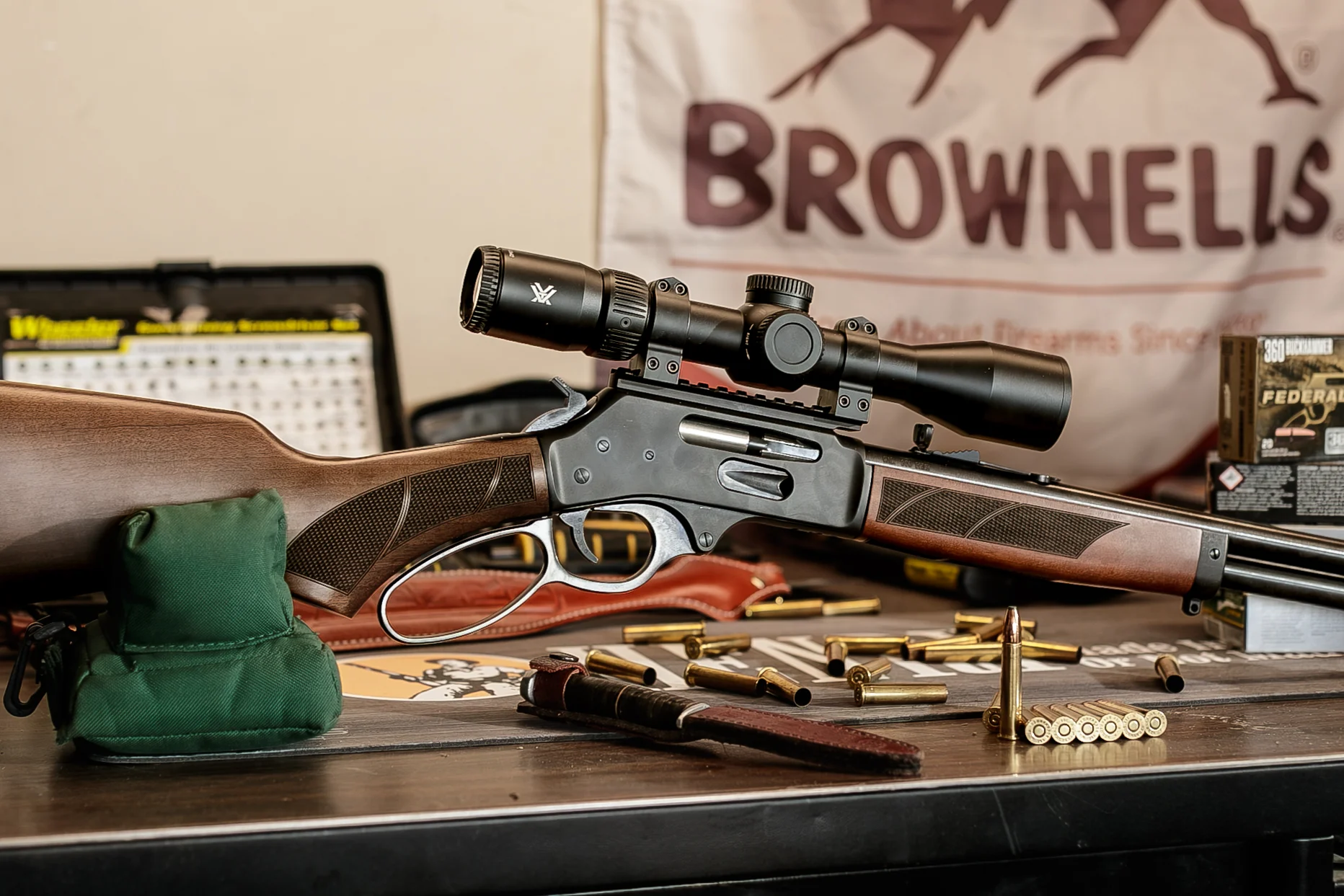
Preface: 2026 marked a decisive shift in direction for Henry Repeating Arms and their ever-growing lineup of products. Their newest centerfire offerings have been grouped into series based on design and purpose. Those series include the Provider, Protector, Explorer, and Special Products Division lines. Each of those series is split into action size, based on calibers offered. The H9 covers .30-30 Winchester and similarly-sized cartridges, the H10 is chambered in .45-70, and the H12 includes .357 and .44 Magnum. This review focuses on the H9 Provider Series.
Growing up in the Midwest, I remember the first time I hunted with my grandfather’s lever action rifle. The feel of the hand-cut checkering on the stock, mixed with the smell of dried leaves on that cool November morning, ignited a spark that has been burning ever since. Henry Repeating Arms’ Provider series is a line of rifles designed to put meat on the table, while retaining that classic aesthetic that takes me back to those “good old days.” Their timeless pairing of rich brown walnut and blued steel components makes for a match as deadly as it is classic.

Henry offers the H9 Provider Rifle in the woods-proven .30-30 Winchester, .35 Remington, .38-55 Winchester, and .360 Buckhammer. This particular rifle I am testing is chambered in .360 Buckhammer, a cartridge developed by Remington Ammunition in 2023. Ballisticians took a .30-30 case, and rather than bottle-necking it, they kept the case wall straight and topped it off with a .358” diameter projectile. Using bullets weighing between 160 and 250 grains, they achieved velocities well above those of the .30-30 and 35 Rem, with barely any increase in perceived recoil. This increase in velocity and energy downrange presents a hard-hitting option to anyone looking for a ≤ 250 yard deer rifle, especially those living in “straight-wall” states where bottlenecked cartridges are prohibited on large game.
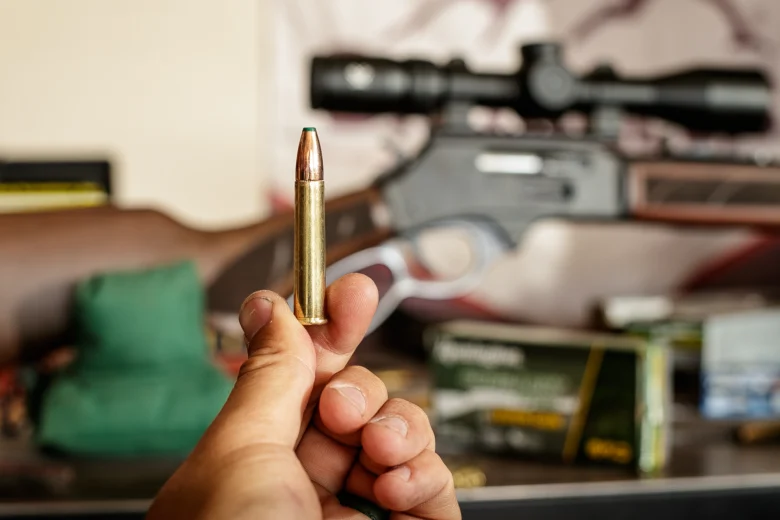
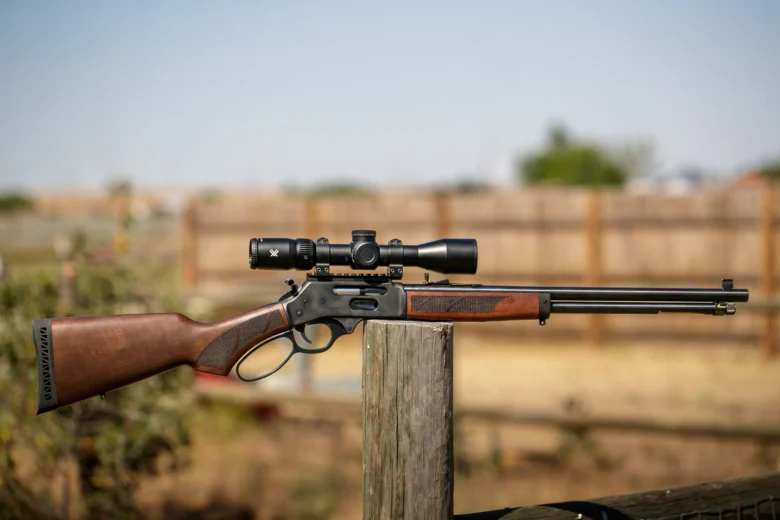
Out of the box, the Provider looks and feels like many of the rifles I grew up with. The 7lb rifle is balanced exceptionally well exactly between where my two hands naturally rest, and as such, points very naturally. The 39” overall length feels handy enough for snap-shooting offhand, but stable enough to take those 200-250 yard supported shots across open fields. Despite its classic lines, it’s no “Safe Queen.” It’s made to be carried through thick brush, leaned up in the corner of a box blind, and slung over the shoulder on your way to the 8-point buck you just harvested with it.
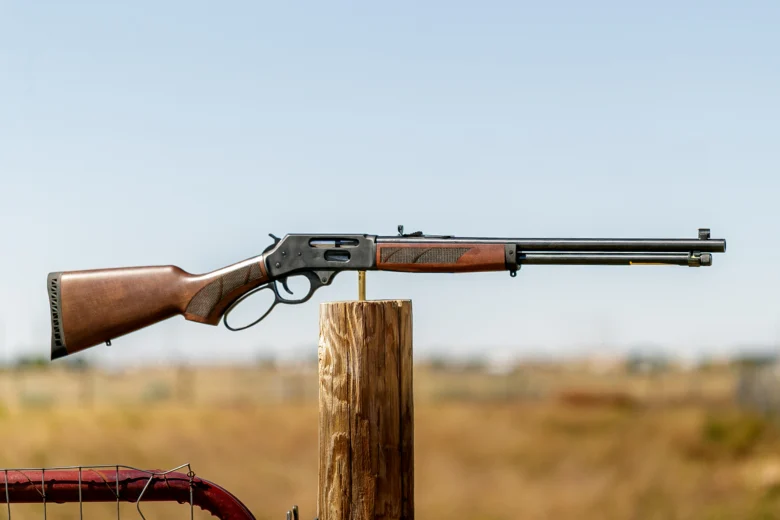
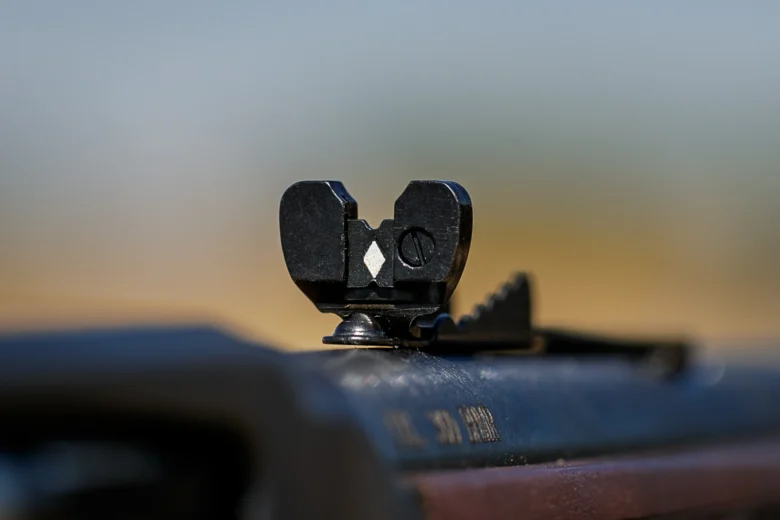
The satin finish of the twenty-inch, blued steel barrel features a straight taper from the receiver to the muzzle. The barrel profile is heavy enough to retain accuracy through sustained strings of fire, but light enough to offer the classically fast-handling characteristics of the lever action platform. The bore features seven rifling grooves in a 1:12” right-hand twist. Atop the muzzle end is a serrated steel sight blade, adorned with a .090” brass bead. At the receiver end of the barrel is a semi-buckhorn rear sight. At a quick glance, it appears simple and straightforward, but a closer look reveals the finer details: the rear sight is fully adjustable for elevation, thanks to a classic stepped ramp, while a set screw locks the windage setting in the ⅜” dovetailed notch. Once the screw is loosened, the sight can be drifted left or right with a small brass punch and mallet, and the set screw retightened. The .060” rear notch itself is cut into an independently adjustable steel plate with its own set screw. This small plate can be moved incrementally for precise zeroing. Back the set screw out a little further, and the plate can be removed, rotated 180°, and reinserted for an even finer, .040” rear notch. To maximize visual acuity, a white-enameled diamond is ground into the plate. The diamond’s uppermost point crests just below the notch, and helps to draw the sight picture together quickly. Sixteen inches separates the front bead and rear notch, offering a generous sight radius for better precision at distance.
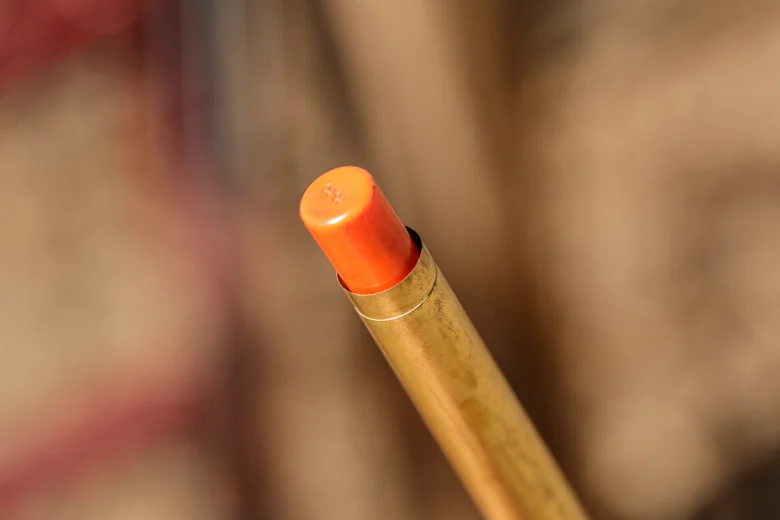
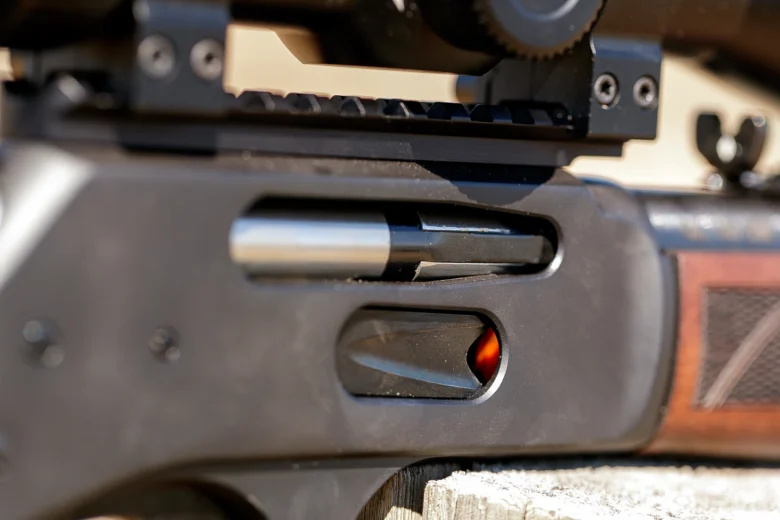
Underneath, a tubular magazine extends almost the entire length of the barrel and offers capacity for six rounds, plus one in the chamber. As with all tube-fed Henry models, the brass inner magazine tube is removable as an option for loading and unloading the rifle. For those who may experience dexterity issues in their hands, the knurled steel knob provides sufficient purchase to manipulate the tube. The knob’s detent pin secures the tube in place but is light enough to turn loose without strain. The magazine follower itself is bright orange, which offers a quick visual reference through the loading gate and ejection port to confirm if the magazine is empty.
The straight-grained American walnut buttstock and forend are paired for consistency in both grain and color. The satin finish keeps glare to a minimum while the machine-cut checkering offers both aesthetic appeal and sufficient grip in any weather. The forend terminates in a blued steel grip cap, and features a stud for mounting a sling. Meanwhile, the tail end of the buttstock features a ventilated rubber recoil pad, keeping recoil manageable for better follow-through on target. Discerning readers may notice how this new series of Henrys differs from previous models. This is the first time the H9’s blued steel has been married with walnut in a curved, pistol grip configuration. In contrast to the traditionally straight-gripped rifles, the curved design offers a slightly more neutral wrist position, especially when shooting from a static position like a bench or in a deer blind.
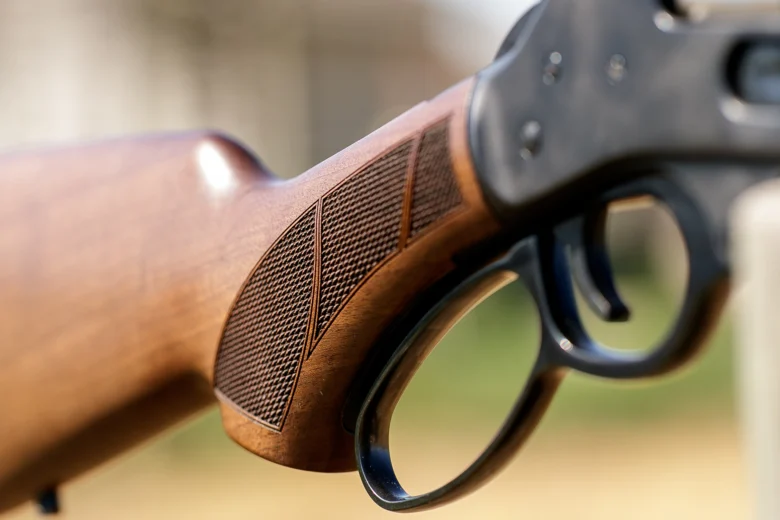
Paired with the curved pistol grip is an equally curved lever. The lever loop itself is oversized, offering more than enough space for large hands to fit comfortably, even while wearing thick gloves. The trigger guard is equally spacious. Out of the box, the trigger itself tested right at 4.5lbs, and broke clean with minimal creep. On the side of the receiver is the ejection port and traditional loading gate. Across the gamut of lever guns I’ve used over the years, I found this H9 to be one of the easiest to both load and unload through the side gate. The receiver’s flat top is drilled and tapped for mounting optics. When cycling, shells eject slightly forward of 3 o’clock, making this rifle ideal for both right- and left-handed shooters.
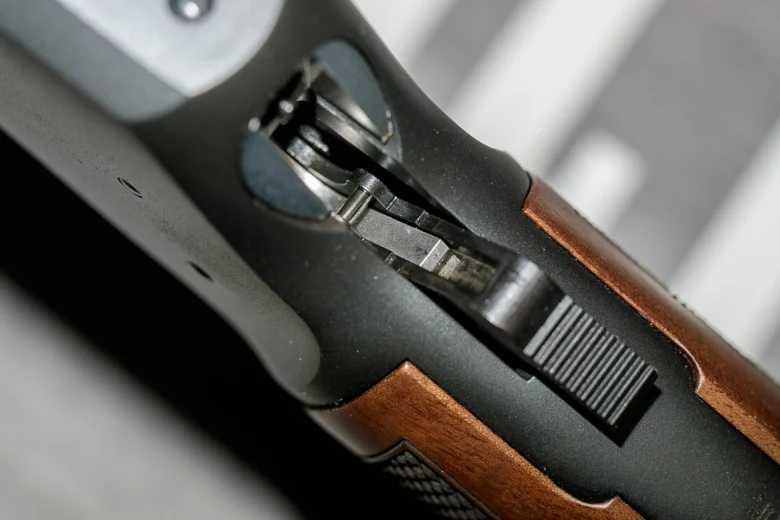
Safety is neither obtrusive nor an afterthought on the H9. Where many companies have opted for a traditional half-cock hammer position with redundant crossbolt or tang safeties, Henry has instead opted for a transfer bar safety. If you are not familiar, a transfer bar allows the firing pin to be contacted only if the hammer is cocked and the trigger is intentionally pulled. The rifle can be carried loaded with the hammer fully down and be rendered drop-safe. Additionally, the underside of the grip houses a mechanical trigger block that is disengaged only when the lever is fully closed, preventing any risk of firing out of battery.
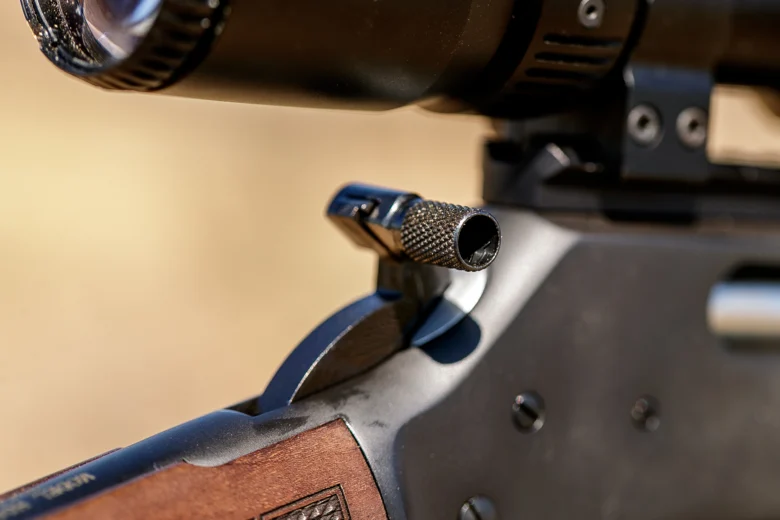
The H9 Provider is ready to shoot straight out of the box, but I wanted to take it a bit further. I opted for the Henry Picatinny Rail, which is manufactured by Evolution Gun Works and sold on the Henry Outfitters site. I’ve used EGW scope bases on a number of rifles and always found them to be a good blend of affordability and exceptional construction. These Henry rails have a channel cut down the middle, which allows the iron sights to be used without fully removing the base. For rings, I opted for a set of Warne Maxima steel one-piece quick-detach rings. Warne guarantees a return-to-zero with the QD rings. I tested the QD guarantee and was pleased to see it indeed held zero when removed and replaced on the rifle. For the optic itself, I went with a Vortex Viper HD 2-10×42 I had on hand. The 10X Magnification made accuracy testing at 100 yards a whole lot easier for me than only using iron sights. The addition of a GrovTec hammer extension gives me the ability to manually operate the hammer without having to reach up underneath the scope.
With my scope mounted, I loaded up my truck and headed to the range. I brought along several boxes each of four different factory loads from Remington, Federal, and Fiocchi. The goal was to test each load with multiple five-shot groups and test the reliability of the rifle through sustained firing. Across the four different ammunition types in the rifle, all cycled flawlessly through the action. Beginning with Remington’s 180gr Core-Lokt Tipped ammunition, I took a few shots to fine-tune my zero. The recoil was very manageable, and fairly reminiscent of the heavier loads in my .30-30 Win lever gun I’ve been shooting for a few years now. Straight out of the gate, accuracy testing with the Core-Lokts went exceptionally well. My first few five-shot groups printed consistently around 1.1”. My best group had four shots in a little 0.49” cloverleaf, before I pulled the last shot, giving me a 1.08” final measurement. The rifle really seemed to favor bullets with a bit better ballistic design, and the Federal Premium Hammer Down 220gr Bonded Soft Points performed fairly consistently on the platform as well. My best group was just under 1.5”, while all groups combined averaged 2.1”. As would be expected, recoil was slightly higher with the 220gr bullets versus the 180’s.
Initially, the more round-nosed soft points grouped wider, with Fiocchi’s Field Dynamics 200gr soft points averaging group sizes of 3” and Federal Power-Shok 180gr Soft points averaging 3.6” groups. However, both loads seemed to prefer a well-fouled barrel. With 120+ rounds through the rifle, I retested accuracy on both of those, and was able to get down to 1.5” on my group size with the Fiocchi loads. The Federal Power-Shok also performed noticeably better, and I managed just shy of 1.2” at 100 yards.
As I write this going into the Summer, I’m already planning this coming deer season. Hunting with friends and family in the Midwest calls for a rifle that can perform no matter what I throw at it. From 200+ yard shots across cut fields to snap shots through densely timbered woods, Henry’s H9 Provider series in 360 Buckhammer checks all the boxes for me. The brass front bead and semi-buckhorn rear sight make the rifle ready to hunt without the need for additional optics, but the drilled and tapped receiver makes mounting optics a breeze. The satin-finished walnut furniture and matte blued steel components present a classic aesthetic, while modern manufacturing techniques make this a rifle that cycles smoothly, shoots straight, and will put food on the table for generations to come.
| Factory Load | Average Velocity | Average Group | Best Group (5 Shots) | Muzzle Energy | Terminal Energy 200yds/250yds |
| Remington Core-Lokt Tipped 180gr | 2347 fps | 1.07” | 1.04” | 2200 ft-lb | 1111/927 ft-lb |
| Federal Premium HammerDown 220gr Soft Point | 1992 fps | 2.14” | 1.48” | 1939 ft-lb | 1092/947 ft-lb |
| Federal Power-Shok 180gr Soft Point | 2380 fps | 3.63” | 1.11” | 2264 ft-lb | 1001/808 ft-lb |
| Fiocchi Field Dynamics 200gr Soft Point | 2165 fps | 3.04” | 2.31” | 2081 ft-lb | 913/745 ft-lb |