

Author: Jono Reduker

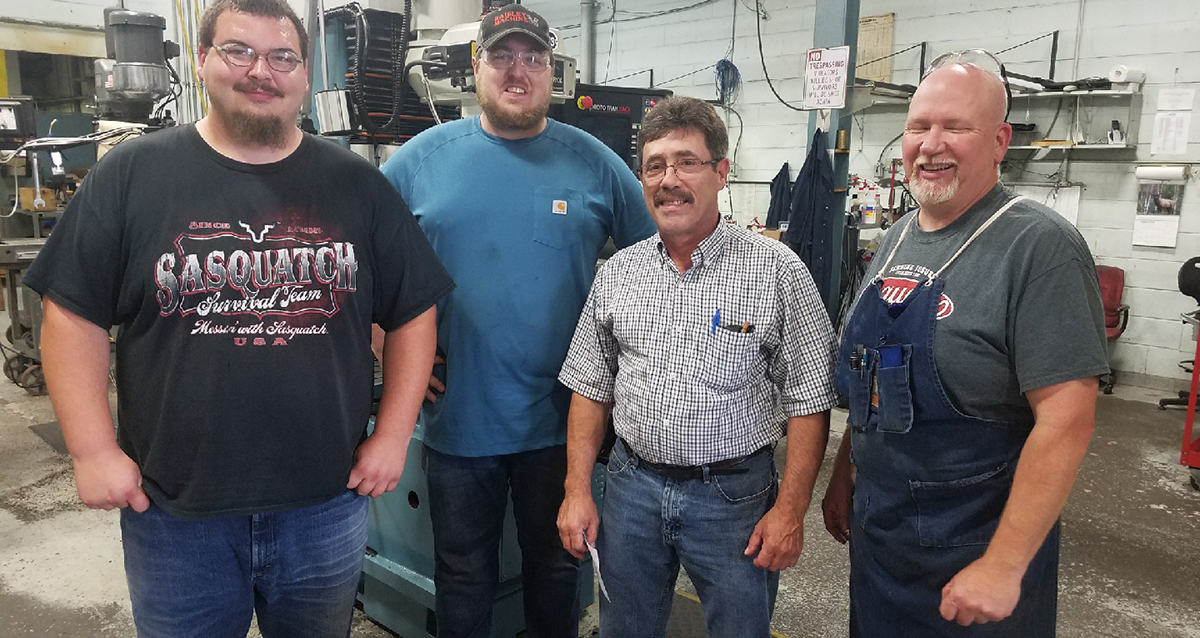
“Made in America or not made at all,” isn’t just a motto for us. It’s at the very core of the Henry DNA right alongside providing top-tier customer service and manufacturing a product that you can be just as proud to own as we are to make it. It’s also a promise to our customers and the more than 450 people of Wisconsin and New Jersey that Henry Repeating Arms employs.
To show our commitment to this promise we invited the host of Henry TV and YouTube trickshooter, 22Pinkster, to visit our Rice Lake, WI facility and film the making of a Henry H010 .45-70 from beginning to end. The video marks the first time a full tour of the facility is shown to the public.
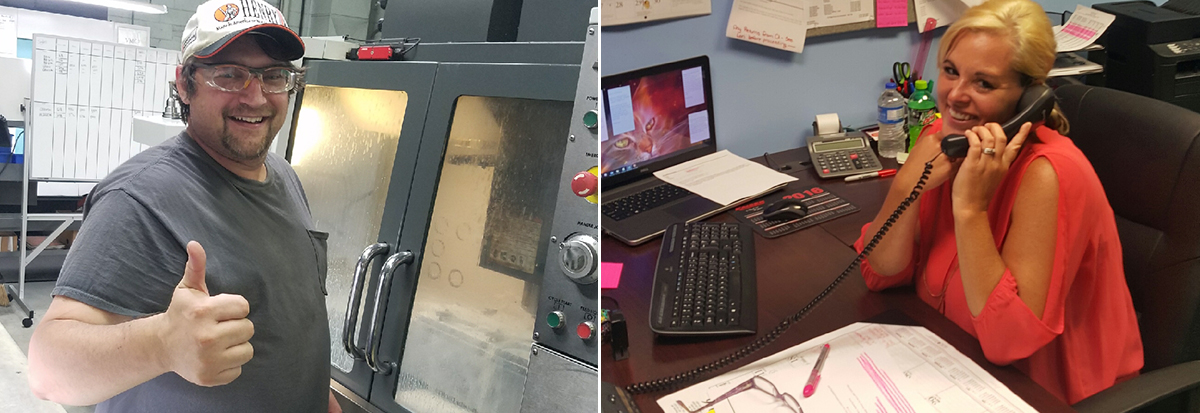
The tour is guided by Vice President and General Manager Andy Wickstrom, who has headed up the Rice Lake operations since the factory was purchased by Henry in 2006. This location started out by supplying our Bayonne, NJ facility with parts and then progressed to making fully assembled rifles with the steel .30-30 and .45-70. Now, this facility manufactures and ships almost half of Henry’s over 150 different models.
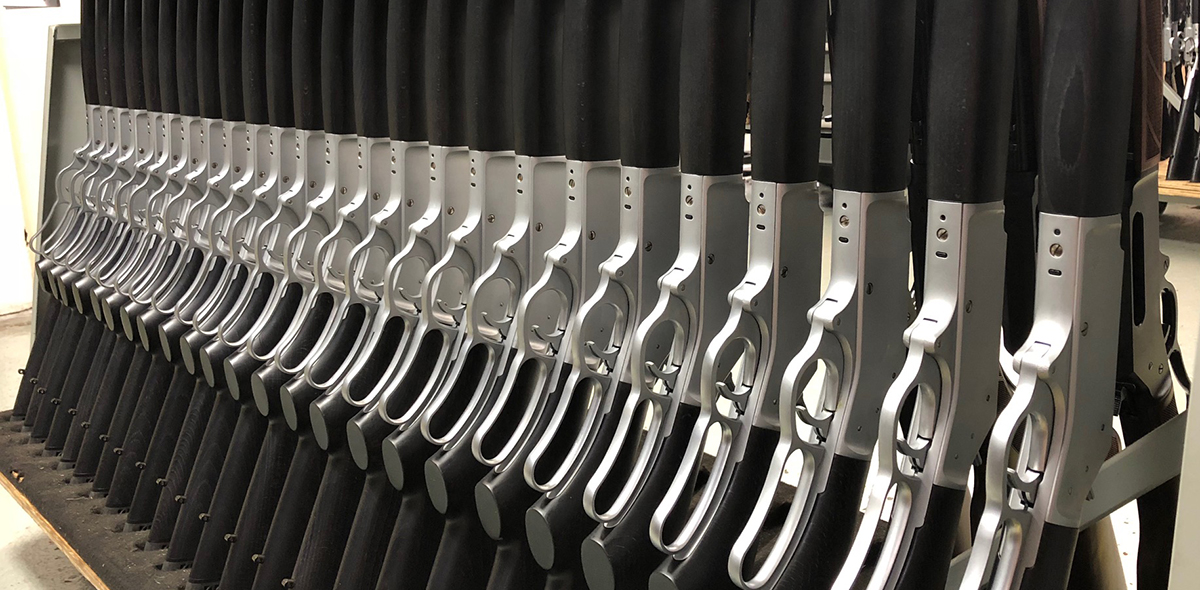
As you watch this video we hope you will take a moment to reflect on the number of hands a Henry rifle or shotgun passes through before it’s boxed up and shipped out. Each of those skilled hands belongs to a hardworking American who takes great pride in what they do, and we hope that same pride carries over to owning a Henry.
View the video here!

There is perhaps no better test for an outdoorsman than turkey hunting, which is why a successful Spring gobbler hunt is one of the most fulfilling experiences one can have with a shotgun. It’s a test of preparedness, a surprisingly tough battle of wits against a bird with a brain the size of a walnut, and at times, a coin toss. The idea is simple but the execution is difficult. Your movement matters, your reactions matter, and small mistakes can cost you the day. To help make your season a success, we’ve gathered some tips and tricks to keep in mind as opening day approaches.
Scout Your Area

This is a great exercise to get out in the field when the cabin fever starts kicking in during late winter. Finding your perfect Tom isn’t the goal here, so just focus on finding where the flocks are in your area. You want to find where they’re feeding, get an idea for where they’re roosting, and get some trail cams set up in areas where you see signs of the flock. At this point, you’re not calling to the birds, just observing and making mental notes of how you’re going to tackle the upcoming season. You know what they say about preparation…
Goodnight Tom

If you can follow a Tom to his roost you’ll know exactly where to set up shop the next morning. While the pre-season scouting is a bit more general in nature, roosting a bird requires getting in close. With patience and keen observation finding where the birds are roosting is one of the best ways to increase your chances of success if you have all your other bases covered. If you know where they’re sleeping, you’ll know where they’re going to wake up.
Time to Talk Turkey
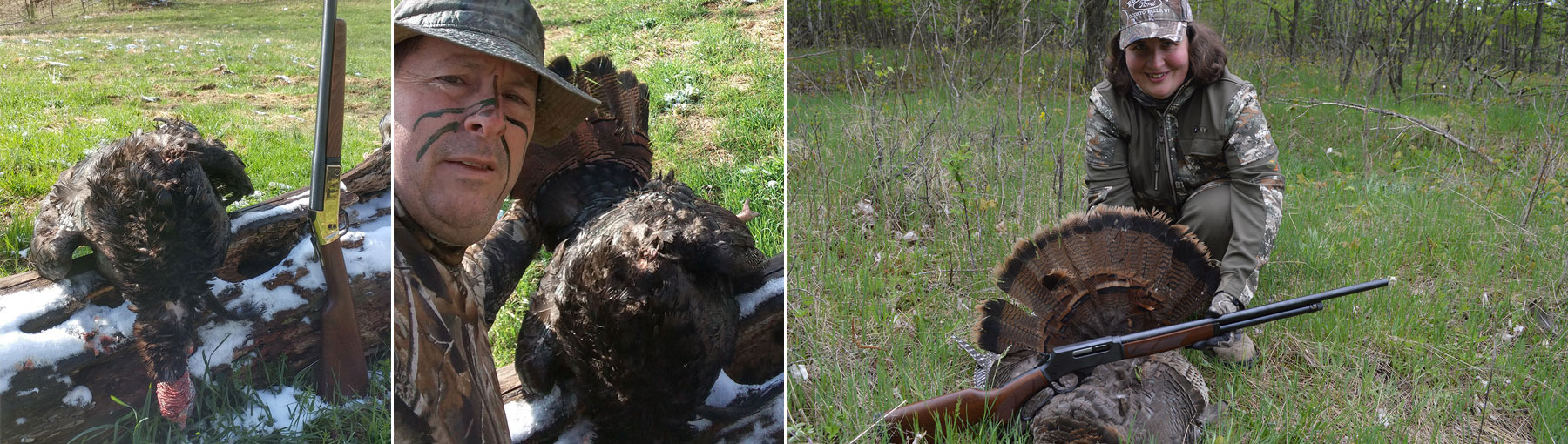
Pulling the trigger when a bird is in your sights is the easy part. Getting the bird into your sights is the hard part. Through your pre-season scouting and roosting you’ll be able to hit the ground running on opening day and get to the right general area, but calling the Tom in close enough for a kill requires “talking turkey.” There are many, many different types of calls and we could probably write an entire article just on turkey calls (and we probably will), but if you’re just getting started we recommend keeping it simple. It may seem counterintuitive to start with a diaphragm call because they’re a bit harder to use than others, but start perfecting that call now and you’ll be set for life. Turkeys have impeccable eyesight, which is why all the camo is necessary, so why blow the hunt with a call that requires physical body movement if there are alternatives? Throw a few of them in your car to practice during your commute (avoid this if you take public transit), and take advantage of the myriad of tutorial videos on YouTube. Your turkey calling game can make or break a hunt, and it will take years to master, but this is also where a lot of the reward comes from. Bringing in a Tom close enough for a kill shot through your “conversation” with the bird is one of the most thrilling parts of any hunt you can do.
Choose the Right Equipment
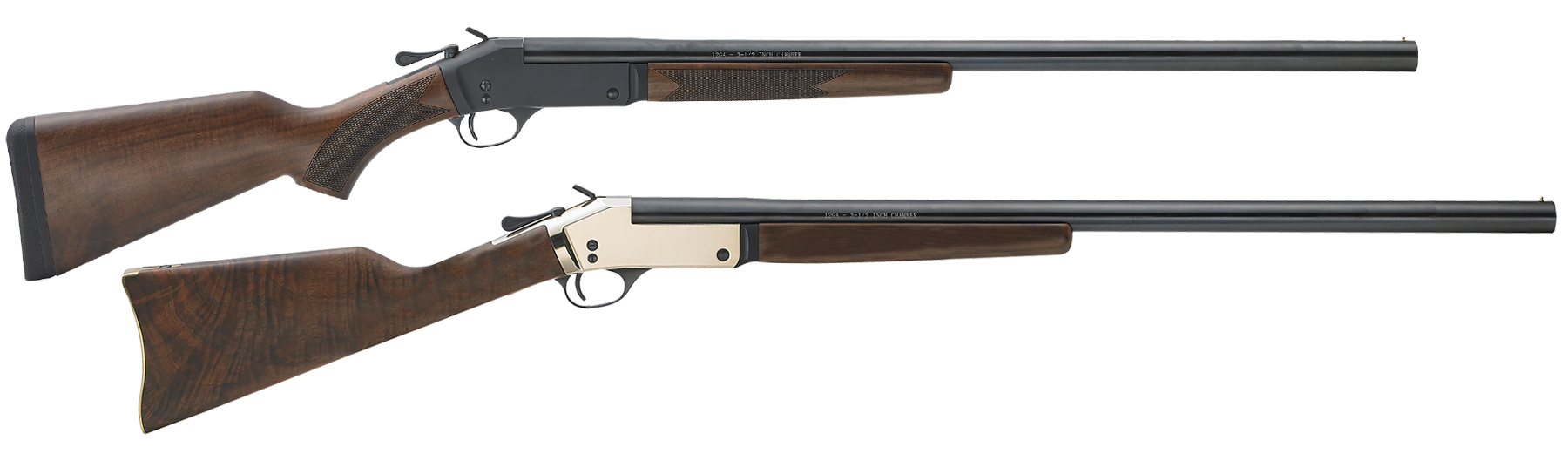
You’re going to need camo, and lots of it. Check out our Henry Camo Pullover Hooded Sweatshirt and our Henry Hunter’s Supreme Coat. You’ll need to find a pattern that matches your local hunting grounds and deck yourself out from head to toe, but don’t stop there. Ideally, your shotgun will be camouflaged as well. Our Steel Single Shot Shotguns are a perfect choice for the hunt, so use some camo wrap on the buttstock and barrel and you’ll be good to go.
The most important thing about Spring Turkey season is to get out there and enjoy it! Whether you are looking to make this your first ever hunting season, you’re looking for a different hunt to pursue, or you’re a seasoned vet, the best time to start is now.
Is your home state one of the Top 10 best states for turkey hunting?
Read this article from the NRA’s American Hunter to find out »

There can be little doubt we live in a trying age, where the actions of a few mentally deranged individuals threaten an entire way of life for some of the more law-abiding citizens in the populous. Firearms are an incredible responsibility, one that must be taken seriously. Although we may practice the four safety rules religiously, there is a greater responsibility that is not always discussed, the legacy of firearms.
I grew up around guns, it was part of my heritage. I did not marvel or paw at the rifles and shotguns which were racked on the wall because there was no mystery to me—my natural curiosity had been satisfied with trips in the field. I knew what the guns could do and did not have to wonder.
I entered the field of law enforcement at an early age and my knowledge and skills with firearms went from recreational to professional. This caused me to think about my upbringing and that of my own children. How would I address the complex issues (especially these days) surrounding firearms with them?
START THEM OFF RIGHT
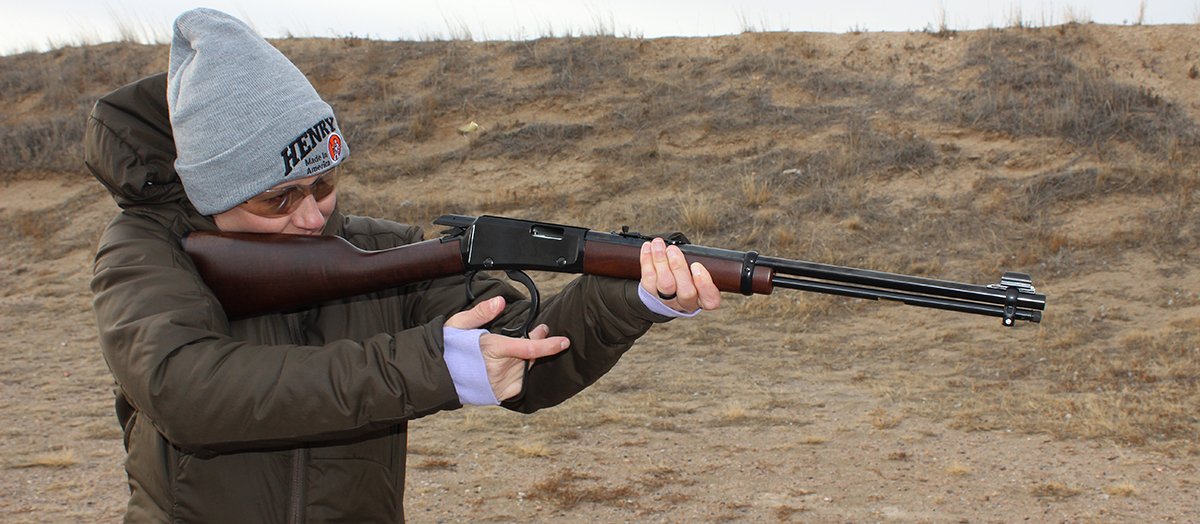
Henry has some amazing options to start young shooters out so the method was a simple answer. One of the first parts about creating a legacy is starting with quality components, things that will last. Properly maintained Henry rifles will provide service for lifetimes, allowing my children to pass on their guns to their children. In addition, they will pass on the associated knowledge and responsibility.
Getting kids to put down their screens for a few minutes is a daunting task these days, I understand. But if you consider the goal-oriented nature of what is happening in their electronic endeavors you soon find they are craving accomplishments through adversity. The digital medium they are using is simply keeping this fire alive. It is our responsibility to return them to the analog, show them how careful aim, trigger control, and breathing can result in a successful shot.
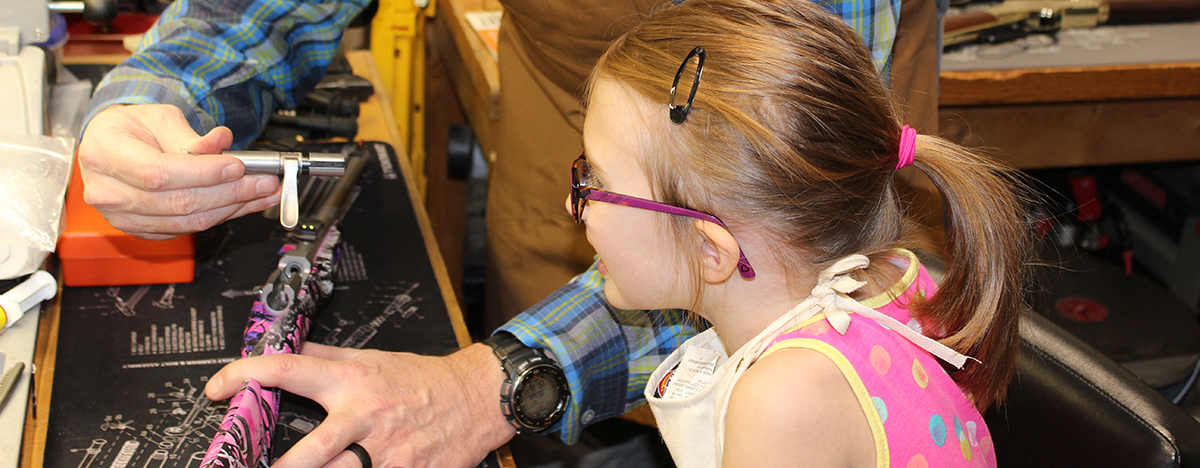
As a firearms instructor I have learned to not overwhelm new students with too much gun. Bad experiences can stick with new shooters for a long time. When we set out to take our 5-year-old daughter out to shoot we got her a Henry Single Shot .22 in pink and purple Muddy Girl camouflage. It was love at first sight. For my 12-year-old son, we picked up a beautiful Golden Boy Youth, also in .22. My son had shot before but his most recent memory was the sound and recoil of a .308 rifle. He proceeded with trepidation despite assurances all would be well.
Because of videogames my children had advanced information on what firearms did. My son likely has millions of rounds downrange in various digital settings, but that does not translate to the real experience of the crack of a bullet, the gun bucking in your hands, the whiff of gunpowder, or the ring of a steel target. It also doesn’t teach them the critical firearms safety rules.
Using an empty, lever-action BB gun my wife and I talked about and demonstrated the four hallowed rules and had the children practice good muzzle discipline. It was a great analog to the Henrys and we could see both children warming to the idea. Children need structure, discipline, and this is a wonderful opportunity to impart both. Once everyone demonstrated good understanding, we headed to the range.
RANGE DAY

Starting with a small splatter target at a short distance, my daughter sat in my lap when it was time for the first live round. There, I was able to see and control every little detail. I helped her load, aim, and then fire. A smile crept across her face despite the cold wind that was blowing. Her pink nails matched her gun and her gun also matched her purple glasses. The identical Muddy Girl ear pro were the final touch. Understanding these things were important to her, I was all too happy to encourage.
With my son, I showed him how to load, then demonstrated firing his Golden Boy before handing it to him. When he charged the weapon and fired, I could tell he was nervous. After the shot rang out, he looked at me and asked if that was it. I smiled and said yes. He was so relieved, he began to enjoy himself immensely, firing the entire magazine and wanting to shoot more.
We also brought along a classic .22 Lever Action Henry and my wife fired it (happy wife=happy life), quickly growing accustomed to working the lever and enjoying the light recoil of the small rimfire. Thankfully, I got to play too and I patterened a Henry single shot .410 shotgun with gorgeous woodwork on the buttstock. In my mind, time froze briefly and I realized we were all enjoying the same activity, outdoors—together, and having a lot of fun! No one was downstairs on a console, no one was playing with the tablet on the couch. We were all there in the real world enjoying our Henrys and not distracted by devices.
LEGACY

The legacy of firearms includes a responsibility to teach our children about them. They need the comfort with guns that can only come from knowledge. Their education will bolster them when people with ignorant arguments try to pursue anti-gun agendas. Our children may not grow up to be like us. They may never become IPSC shooters, hunters, police officers or gun collectors and this is okay, but we need them to at least understand this way of life.
A few of our children will become legislators. Most of our children will be voting and they need to have enough comprehensive information about guns to not be swayed by fear-mongering. I have seen bills pass into law that were clearly written by people with a lot of passion, but no knowledge of firearms. With enough good representatives of firearms owning citizens, the shady comparison with the criminal element cannot easily be made.
For my family, the first step was getting some Henrys to introduce my children to this way of life. The guns will become a part of our tradition, creating a long-lasting legacy that starts with them and continues through the generations. Each descendant who passes the gun down will also pass on the responsibility that comes with gun ownership thus ensuring this way of life—a legacy. Heraclitus believed character is destiny. Which traits will you pass on to your children?
I’d like to thank Liberty Firearms Institute for being my local Henry dealer as well as handling transfers. In addition, I owe thanks to Pawnee Sportsmen Center and Aguila ammo for making this family fun possible. Finally, special thanks to Henry for making heirloom-worthy firearms to begin the legacy in my family.

America’s Unique Contribution To International Firearms Design
When the Chinese invented gunpowder in the 9th Century, it was a big deal. Much flash, .big bangs, and a super-cool new way of celebrating the New Year. Those were good enough for the next three hundred years or so, but eventually somebody got to wondering what else the stuff could be used for, and by the 12th Century the first crude “guns” were emerging, in the form of hollow tubes of various sizes closed at one end, open at the other for cramming in a basic mix of sulfur, charcoal, and saltpeter behind stones, iron balls, scrap metal, and/or anything else the experimenter felt like throwing out the muzzle, and using a touchhole to introduce a spark, flame, or fuse.
Just as likely to explode and destroy the user as the target, the science of gunpowder and projectiles slowly progressed till it was a regular fixture for field artillery and naval applications by the 1600s, and in that time frame more sophisticated methods of igniting gunpowder, combined with the growth of industriavol capability and more portable and dependable personal-carry long guns and pistols, all began to accelerate.
Skilled craftsmen produced smaller tubes a man could actually shoulder or carry on a belt, and the ignition process ran through a technological evolution from matchlock to wheellock to snaplock to flintlock to caplock to self-contained metallic cartridges, all in relatively quick succession (as the turtle travels, anyway). Barrels incorporated rifling, sights were developed and refined, gunpowder itself was improved and diversified for specific uses, and the world of personal combat on the battlefield and success in the hunting camp was transformed forever.
Along the way, as with anything that works well enough to become a centuries-old institution, there were milestone standouts. The European matchlock of the15th Century was arguably the great-great-grandpappy of today’s modern rifle, with the first practical (mostly) on-board ignition system. It allowed the gunner to keep both hands on his weapon, both eyes on his target, his muzzle from wobbling all over while touching a loose “match” (actually a smoldering piece of rope) to the flash hole, and (once lit) that match was attached to the simple lockwork and didn’t have to be carried separately or dropped and lost during the heat of battle.

German matchlock musket with serpentine lock The Museums Schloss Glatt
The flintlock, attributed to the French in the 17th Century, is probably one of the most famous early designs known widely to gunnies today. It was simple, reliable, easily serviced, long-lived, flints were widely available and quickly replaced by the user in the field, and later versions incorporating those new-fangled lands and grooves were quite effective in the hands of colonial soldiers delivering a very clear “Thanks For Visiting, But It’s Time To Go Home Now” message to the Redcoats at Lexington and Concord in 1775.
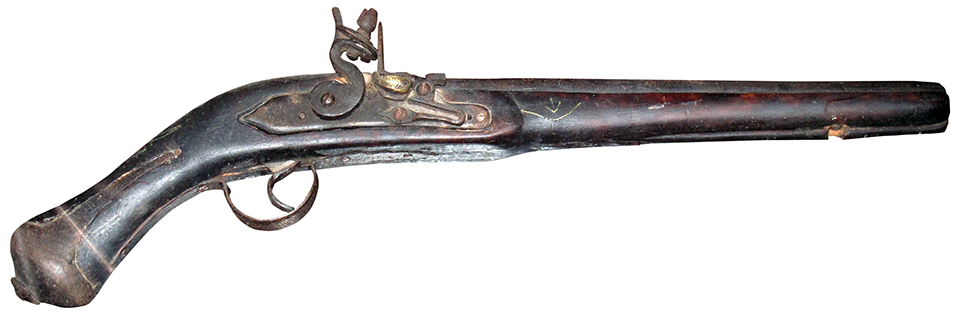
Flintlock pistol detail Palace Armoury Valletta
Skipping forward, other nations have produced stand-out classics that live on in history books, private collections, museums, and still in actual use today, decades after they were introduced. In comparatively modern times, Germany gave us Peter Paul Mauser’s enduring bolt-action 1898 rifle, Georg Luger’s pioneering 1902 semi-auto pistol, and Walther’s ground-breaking double-action P38 pistol; Italy’s 400-year-old Beretta firm generated the current US military M9 pistol; Great Britain produced the much-respected and long-running Enfield .303 bolt-action battle rifles, along with their distinctive Webley break-top double-action military revolvers; Russia built millions of the brick-solid Mosin Nagant bolt-action military rifles and Nagant double-action revolvers; and Austria originated the Glock pistols in 60% of our law enforcement leather. There are other historically important designs like the Swiss straight-pull Schmidt-Rubin rifle, the French Lebel’s tube-magazine bolt-action, and the Japanese Nambu pistol, all of which have their place in the Gun Designer’s Hall Of Fame, but certain models are just inherently more recognizable than others, and whether that’s due to a good design or a great press rep, the result is the same. Hold up a Luger or a Webley in front of a dozen even halfway gun-savvy people, and you’ll get a dozen nods of recognition.

Mosin-Nagant Infantry Rifle Model 1891, Russia. Caliber 7.62x54mmR. From the collections of Armémuseum (Swedish Army Museum), Stockholm, Sweden.
And, the US has earned our own place on the worldwide stage.
Where Everybody Knows Your Name
Three places, actually, with three enduring designs that have stood the test of time in a world where the latest and greatest runs heavily to plastic and hi-cap. All three, with roots that date back well over a hundred years, are still in production by both their original makers and by other companies with their own variations, and still selling well to a market segment that appreciates the history, the tradition, the spirit, and the enduring utility of what they represent and offer.
The first handgun was not invented in America, but Colt’s 1873 Peacemaker certainly was, and with 143 years of backstory behind it that include tales of adventure and exploration here on our shores and on far-away continents abroad, there’s probably no better-known handgun around the globe that crosses borders, boundaries, and cultures, than the famed “cowboy” gun so widely carried in the glory days of the Old West, and so immortalized by the silver screen since The Great Train Robbery in 1903. Still produced by Colt, and widely copied by various foreign makers, the Single Action Army figures prominently on anybody’s list of the Ten All-Time Most Significant Handguns In Firearms Development.
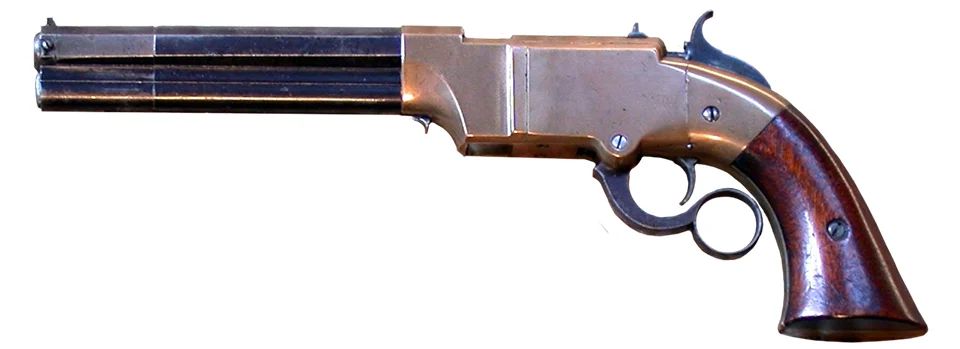
Volcanic repeater mechanism, here as a pistol. Edited from the file Volcanic by Homo.
Equally, the first auto-pistol was not an American design, but in 1911 Colt’s new .45 ACP pistol developed for potential military contracts, from the mind of the most prolific firearms designer who ever lived, John Browning, was the first truly practical big-bore self-loading magazine repeater that offered power, reliability, and rugged durability in a package that was arguably one of the best issued sidearms of its day, and remained in service with our military branches until it was officially phased out in favor of the 9mm Beretta M9 pistol in the late 1980s. Also still made by Colt, and also manufactured by dozens of other companies here and abroad, the 1911 rides on in civilian holsters for concealed carry defense, shows up regularly at weekend ranges and in competition, supports a number of specialized shops as a base gun for full-blown custom projects, and is more popular today than at any other time in its previous 105-year history.
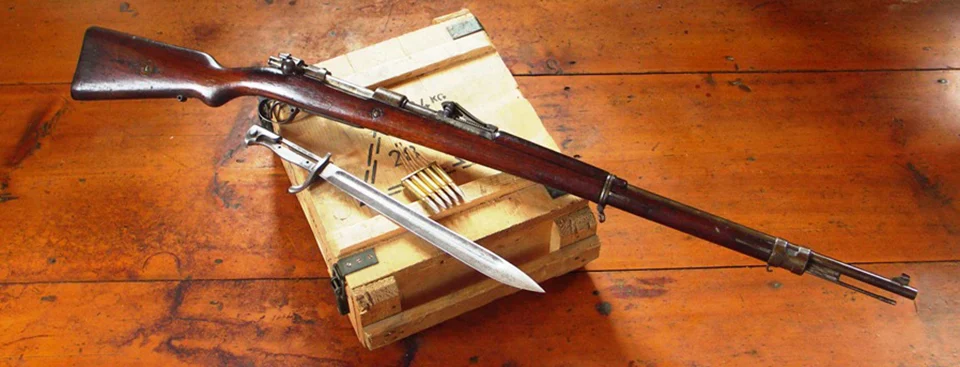
Mauser M98 Rifle from the collection of Vaarok, photograph released for the public good. A Gewehr 1898 produced by “Deutsche Waffen und Munitionsfabriken” in 1905, with a regimental stock tag indicating issue to the 114th Badisches Infanterie Regiment. Pictured with a five-round stripper clip of 8x57IS standard ammunition, and a SS98/05 “butcher blade” type bayonet, which is regrettably missing the grip panels.
And, last, but far from least, the purely 100% American lever-action rifle, originating in concept with Horace Smith and Daniel B. Wesson and their early attempts to create a repeating handgun with self-contained “cartridges” in the 1854 Smith & Wesson Lever Pistol. Further development led to Oliver Winchester’s involvement, and when Smith and Wesson finally gave up on the lever-action idea because existing ammunition technology was still lagging too far behind and turned to the revolver, Winchester parlayed the under-barrel tube magazine and reciprocating lever-actuated bolt repeating rifle concept into the foundation of a firearms empire with a name that became as well-known as Colt in the industry. Winchester owed that empire largely to Benjamin Tyler Henry, who both advanced rimfire ammunition to practical levels and the primitive lever-action itself to make a functional rifle that could use it. The result was the 1860 Henry, and one of the first successful long gun repeaters. At the time, its only real competition was the relatively short-lived Spencer that also saw use in the Civil War, but the Spencer design was quite different in operation and only lasted from 1860-1869. The 1860 Henry spawned the 1866 and 1873 Winchesters based on the same action, and the basic configuration of a lever-operated repeating rifle lives on with two domestic makers and a handful of foreign manufacturers selling to the US under various branding.
Early Days

Mod 60 Henry rifle, magazine open for loading; 3 Henry rounds, one round 44-40 to compare
Of the two early patterns, the Henry and the Spencer, the Henry’s attached underbarrel magazine system was much simpler to use than the Spencer’s 7-round magazine located inside the buttstock. Spencer shooters had a more complicated action and magazine to deal with, where a spring tube providing forward pressure had to be pulled out the back of the stock, rounds slid in with the muzzle down, the spring tube replaced, the lever cycled to chamber a round, and the hammer cocked independent of the lever. Each time the lever was cycled for ejection and feeding, the hammer had to be cocked manually. The Spencer’s primary weakness was a very “lose-able” magazine spring tube that had to be completely removed from the gun for loading, aggravated by the relatively slow shooting process. Its primary advantage over the Henry was a more powerful rimfire round, with a larger-caliber bullet.
Henry shooters, with over twice the Spencer’s payload in the Henry’s 16-round magazine, slid the follower fully forward in its open channel cut to allow the muzzle collar to rotate out of the way for loading by inserting rounds into the magazine’s open end (muzzle up here), swiveled the collar back in line, let the follower drop to provide backward pressure, and cycled the lever to feed, cock, and extract/eject. The Henry’s primary weakness was the open follower slit along the magazine tube that tended to pick up battlefield gunk and grit, and also prohibited a practical wooden fore-end to avoid charring hands during long strings of fire. Magazine-wise, its primary construction advantage over the Spencer was that there was nothing that had to detach from the rifle to load it, and no part that could be lost to render it into a single-shot.
The reasons why the Henry succeeded and the Spencer didn’t could be argued, but today the Henry’s overall superiority is obvious, and once Nelson King brainstormed the side loading port and entirely enclosed magazine for Winchester in the 1866 Winchester (AKA Improved Henry) model, the levergun was off and running.
While the sun was setting on paper cartridges and percussion caps with all of their weaknesses, and rising on the development of self-contained metallic cartridges with all of their benefits, dependable repeaters to use that new ammunition technology were quickly demanding attention among those who immediately got the basic mathematical equation of More Rounds On Board= More Shooting Time/ Less Loading Time+ Increased Save-My-Life Odds, both on the battlefield and on their own during the violent expansion of an often hostile Westward Ho exploration and settlement.
In uniform, one man with a Henry repeater could put out the same volume of aimed fire in one minute that an entire infantry squad could with 1863 Springfield rifles. A hunter, prospector, homesteader, peace officer, or cattle rancher had infinitely better chances of bringing home the bacon, fending off marauders of all sorts, and backing down belligerent owlhoots, with a long gun that held one up the spout ready to go, backed by up to 15 more right in line and ready for action.
America’s Rifle
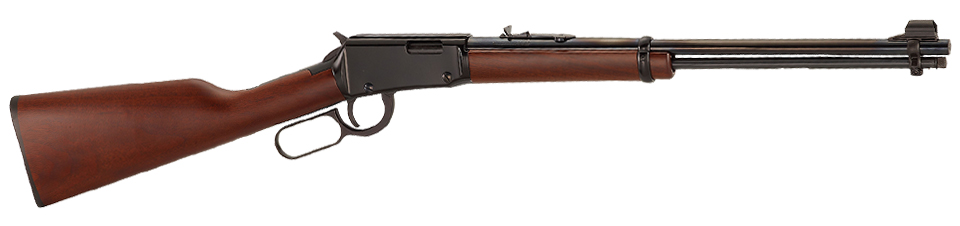
Classic Lever Action .22 »
While our country was only a hundred years old, and still expanding, gun ownership across the pond in Europe was largely restricted to either military or gentry. Military use was…military use. Ownership outside the military was more a matter of wealthy land owners hunting on long-owned private lands, in settled circumstances and established (known) areas. Self-defense was not a priority, and the idea of regular everyday people hunting with firearms for either sport or subsistence took a while to develop.
Here, from 1850 to 1900, times and places west of the Ol’ Mississippi were still unsettled, lands were wide open, new territory needed exploring, law enforcement was not a 911 call away, and those who lived or ventured far from the dusty streets of civilization depended on themselves and reliable tools for their daily existence.
The lever-action evolved steadily during the last half of the 19th Century from the relatively anemic .44 Henry Rimfire into more powerful centerfire rounds like the .44-40 Winchester, and on through the immensely popular Model 1894 .30-30 Winchester into the mighty Model 1895 Winchester with its .30-06 Government chambering carried by the Texas Rangers and the .405 Winchester version that Teddy Roosevelt affectionately referred to as his “big medicine” for lions in Africa. During those years, the levergun was king among those who needed or preferred a trim, easy carrying, reliable repeater for everything from squirrels to moose.
Even when the century that spawned it ended, the lever-action continued to rule in civilian hands in America, till the bolt-action spillover from our Army and World War One picked up momentum, first with the Norwegian-based 1898 Krag service rifle, and later with the German-based 1903 Springfield. Although generally outclassed in power and range, Winchesters, Marlins, and Savages kept right on going in the woods, the trucks, and the saddle scabbards, side-by-side with commercial bolt-action versions as they adapted for civilian consumption, well into the 1950s. Along the way, the unique “hammerless” Savage dropped out of sight, Marlin soldiered on, Browning entered the field with thoroughly modern interpretations built overseas, Winchester ceased domestic production and moved its levergun line-up to Japan, Italian makers geared up to export thousands of Winchester lever-action replicas to the US, Ruger tried a foray into levergun-land that didn’t pan out, and a small company in Brooklyn, of all places, started up lever-action production of a humble budget-entry .22 rimfire.
Today
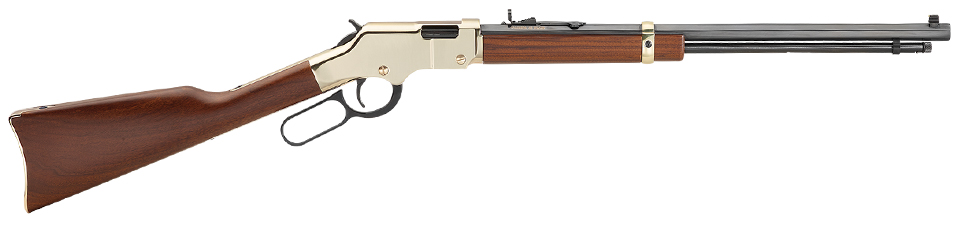
Henry Golden Boy .22 S/L/LR »
Where is America’s rifle today?
Alive and well, thanks, although the market and the players have changed considerably. Much as we die-hard levergunners might prefer otherwise, the truth of the matter is quite obvious – the bolt-action has taken over the bulk of the hunting market, along with the long-range market. Progress was inevitable; the bolt-gun is simply more efficient in the broad picture when it comes to strength, range, accuracy, and range/accuracy enhancers like optics, after market triggers, and stock bedding.
While the Italian repros are still doing well for traditionalists, and the Brownings are well-respected as modern designs, the Winchesters are now comparatively limited in numbers and high-dollar imports with modified actions incorporating modern safety features, and the results of the Marlin buy-out by Remington in 2007 and subsequent move to the Remington plant in New York left the Marlin brand in turmoil, with severe quality control issues and the suspension of certain lever-action models that the company is still recovering from.

Henry Mare’s Leg .22 Mag »
Enter that little Brooklyn outfit, although it’s no longer a “little” outfit. With Marlin and Henry being the only domestic levergun manufacturers left, and Marlin down to a handful of models, if you’re on the prowl for a brand new made-in-America version of the time-honored pattern it’s between those two brands, and Henry offers by far the biggest selection in models and calibers. The little entry-level H001 in .22 LR/L/S that started it all in 1996 is still produced, although the Henry operation is now split between Bayonne, New Jersey, and Rice Lake, Wisconsin, and that model led to variations that include Henry’s flagship Golden Boy, Frontier, Small Game Rifle, Golden Boy Silver, Evil Roy, Silver Eagle, engraved special tribute editions, and short (but street-legal) Mare’s Leg pistol versions, all in the rimfire calibers from .22 Short through .22 Magnum to .17HMR that built Henry’s rep as “The Smoothest Gun In The West”.

Big Boy Classic »
With the rimfires doing so well, Henry brought out their first centerfire model, the .44 Magnum Big Boy, in 2001 in a hardened brass alloy frame followed by the .357 Magnum and .45 Colt, and those led over the years to successive handgun-calibered models in steel frames, the introduction of the .30-30 Winchester and .45-70 Government calibers in brass and steel frames, an All-Weather series, the Color Case Hardened Model, and both brass and steel engraved Wildlife tribute models. Not to mention the centerfire Mare’s Legs in .357 Magnum, .44 Magnum, and .45 Colt, or the first-class instant-retro-collector pieces like the Henry Original Rifle (1860 edition in .44-40) in both brass (alloy) and iron (steel) frames. Or deluxe limited-edition engraved One Of 1000 Editions. Or the 2016 total departure for Henry – the introduction of the Long Range Lever Action in .223 Remington, .243 Winchester, and .308 Winchester; with thoroughly modern gear-driven lever action, strong rotary-bolt-head-lockup, light-weight hard-anodized aluminum receiver, detachable steel box magazine, sling swivels, tapered sporter barrel, checkered walnut, solid rubber recoil pad, and drilled & tapped for optic sights.

The Original Henry Rifle Deluxe Engraved 2nd Edition .44-40 »
Altogether, Henry currently produces 8 different lever-action models, from handgun to carbine to rifle configuration, in 13 different calibers, from basic plinker to deluxe collector, and in a wide range of finishes and options to please anybody from first-gun beginner to old-hand hunter. The current levergun market ain’t what it used to was, but America’s rifle still stands proud, and you’re missing out if you’re not a part of it.

The Henry name, synonymous at once with the advent of the first reliable lever action rifle as we know it, as well as the “load on Sunday, shoot all week long,” mantra, is known the world over for innovation, quality, and intrigue. Some 158 years since Benjamin Tyler Henry received the patent on his original .44 caliber repeating rifle, we are here with Henry Repeating Arms, a rebirth of the beloved old Henry name. Though we are familiar with today’s Henry name, quality, and customer service, what do we know about—and owe—to the man, BTH?
THE FAMILY
Born March 22, 1821 in Claremont, New Hampshire into one of the area’s most influential families, the young Benjamin Tyler Henry was destined for grandeur. His grandfather, Colonel Benjamin Tyler, came to Claremont from Connecticut in 1767—the current home of modern day Henry Repeating Arms– to become the town’s first millwright, builder of multiple successful mills, and inventor of the wry-fly water wheel. That water power ingenuity led the town to prosperity. Another of the Colonel’s grandsons, James Tyler, further perfected his grandfather’s water wheel design, allowing tremendous textile and paper industry growth harnessing the power of the water, and ushering the town to prosperity through the Industrial Revolution. This industrious spirit was alive and well in young Benjamin Tyler, no stranger to the American way—hard work, dedication, and ingenuity leading to success. While he could have followed in the family footsteps, Benjamin Tyler Henry chose to pursue his passions for design and firearms, unknowingly creating an even larger and more lasting name for himself.
BTH
From young apprentice gunsmith and aspiring designer to one of the most underappreciated albeit influential firearms designers in American history, Benjamin Tyler Henry made the Henry name synonymous with the everyman American aspiring for greatness, freedom, and success. This was a man not afraid to break from his family’s lucrative lineage in big industry to forge his own way from the bottom up.
Thus it was he started from scratch, apprenticing for a gunsmith as soon as he was old enough and within a short time, working his way into the role of shop foreman for the Robins & Lawrence Arms Company of Windsor, Vermont. There, he was united with growing names in the firearms industry, the eastern-United States powerhouse area for firearms design and production—coming to work with Horace Smith and Daniel Wesson. Together, both Smith and Wesson labored to create a complicated lever-run external percussion cap rifle known as the Volitional Repeater, which was but a flash in the pan.
When Smith and Wesson moved on from the Volcanic design, a complicated series of moves led to the group re-organizing, and eventually taking on powerhouse investor Oliver Winchester. Henry kept his head down and himself smack dab in the center of things, toiling away with the blue collar dedication and drive that we’ve all come to appreciate from the Henry name. When a series of struggling and continually re-branding firearms companies eventually came to settle in New Haven Connecticut in late 1856 as the New Haven Arms Company, the 36-year-old B.T. Henry was brought on as plant superintendent, having earned the trust of both Smith and Wesson.
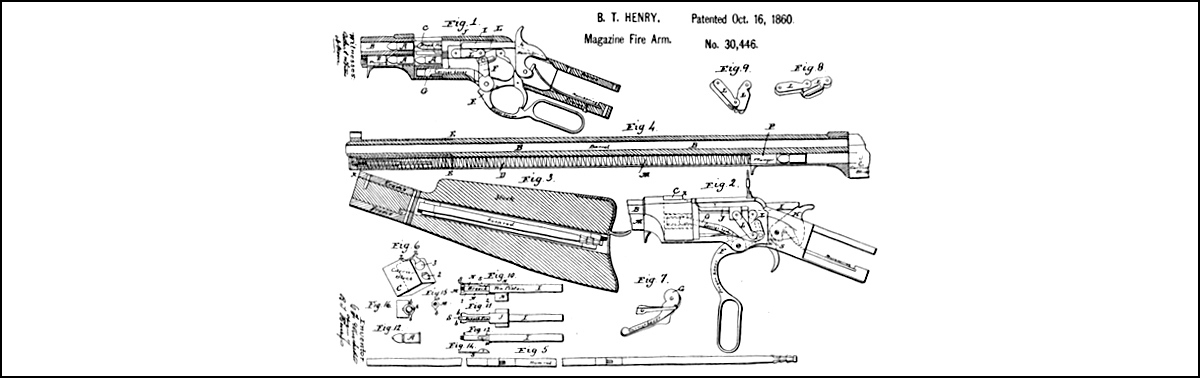
THE BREAKTHROUGH
The rest, as they say, is history. Though Henry helped get New Haven Arms off the ground with his leadership of the plant laborers, his heart was not on commanding a factory floor for others. Rather, having worked his way through the ranks of the firearms and gunsmithing industry, armed with a working knowledge of business, Henry was a designer at heart and continuously perfected his brainchild. Though he believed in his abilities and knew he had done something greater than had been accomplished before in that space, Henry could not have known how great a contribution he had made to the history of firearms design. In 1860, he received the patent on his Henry Repeating Rifle, .44 caliber.
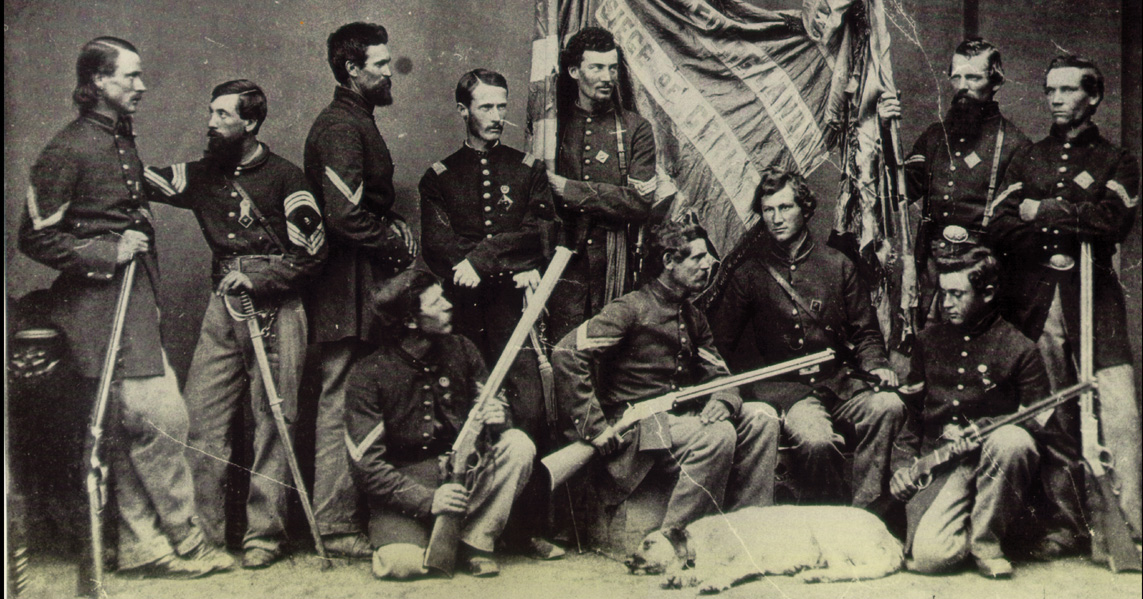
Within a year, the Henry Repeater was put into production in connection with the New Haven Arms Company and under the thumb of investor Oliver Winchester. Shortly thereafter, the Henry Repeating Rifle found its way to the bloody battlefields of both the Civil War and later, the Indian Wars. Soldiers hastened to get their hands on this new advent, a repeating rifle that could fire sixteen shots without reloading at a time when other arms of issue were muzzleloading muskets that required reloading with each shot. While practiced soldiers could load and fire several rounds per minute with their muzzleloaders, the Henry Repeater was a modern marvel. Unfortunately, the Repeater was hindered by price when compared to muskets like the Springfield Model 1861, which could be bought for less than half the cost of a Henry.
Though the Henry Repeater never achieved in its time what we now in hindsight see as a pivotal American firearm design, some 15,000 Henry’s were produced. As a testament to their quality and ingenuity of design, many survive to this day, though collectability and beauty of the patinaed brass far outweigh interest in firing these fine specimens.
LATER YEARS
In the years that followed the rather brief Henry Repeater production boom, the Civil War was reaching its bloody conclusion and things has turned unpleasant for BTH inside the walls of the company that was producing his rifle. Believing he was not being appropriately compensated for his design—the thing into which he had invested years of his life and desires–Henry eventually reached an impasse with New Haven Arms as investor Oliver Winchester sidestepped Henry’s attempt to have Connecticut state legislature award him ownership of New Haven.
Winchester, while working behind the scenes himself to improve upon Henry’s repeater, was able to reorganize and rebrand the company as the Winchester Repeating Arms Company. Benjamin Tyler Henry left the Winchester Repeating Arms Company thereafter, not knowing at the time the difference his design would make not only on the Winchester 1866 lever action rifle, but more importantly, on the face of American firearms. The lever action rifle, with the blood, sweat, tears and drive of BTH, is now recognized as perhaps America’s greatest offering to the firearms of the world.
After Benjamin Tyler Henry left the Winchester Repeating Arms Company, he lived a long and pleasant life, remaining in the field he loved, working for the rest of his days as a gunsmith. At the age of 77, BTH passed away on June 8, 1898 just as he had begun—a blue collar American with a love for firearms, requiring neither fame nor fortune in exchange for a life well lived, and a legacy that thrives to this day.
CONCLUSION
Though BTH has no direct ties to the Henry Repeating Arms Company we know today under the guidance of Anthony Imperato, there’s little doubt that Mr. Henry would be proud to see his name alive and kicking, associated with the values that once drove him to success—hard work with a nod to the average American worker. Let us tip our hat to Benjamin Tyler Henry in recognition of his life, his legend, and remember–every time you cycle that lever on your rifle, you’re paying tribute to the man who created the first reliable repeater. What a beautiful part of history in which we all partake today.
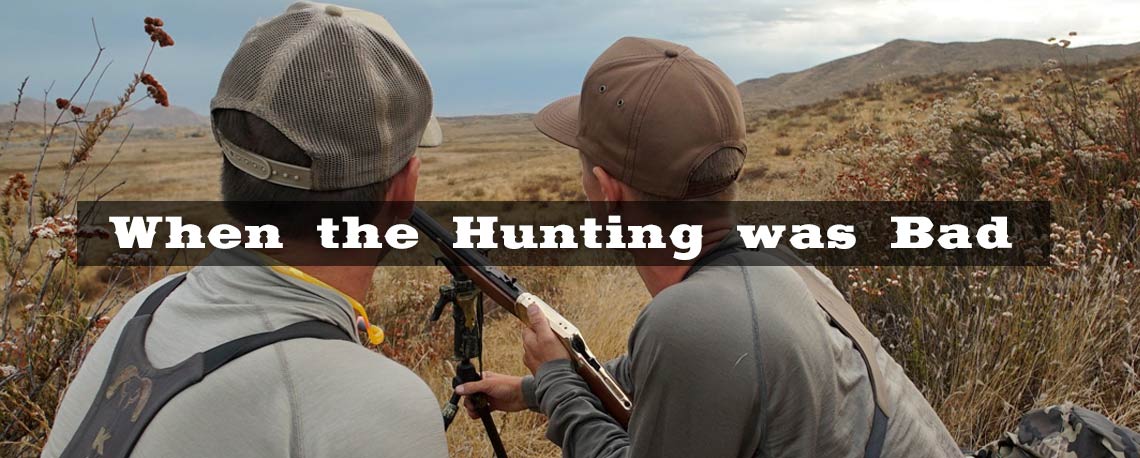
Parts of the story within this article literally came off the bumper of a lorry (commercial truck) driving down a sealed road in Zambia, Africa. Painted on that bumper were the words “When the Hunting was Bad”. Sadly, these five short words sum up the Henry Rifle Africa Project / HRAP. After long conversations with Andy Wickstom, the General Manager of Henry Repeating Arms, the plan of HRAP was to put a Henry Brass lever action rifle chambered in 45/70 into southern Africa for the purpose of hunting medium and large game.
If you do some quick research on the ballistics of the original 45/70 cartridge that the US military introduced in 1873, you will not be all that impressed if you plan on hunting big game with it. Your potential survivability factor if you are hunting Cape Buffalo or Hippopotamus, and only wound one of those very dangerous animals would be questionable. The original Springfield trapdoor, single shot rifles could not take the pressure of some of the modern 45/70 ammo on today’s market.
The Henry Repeating Arms Brass lever action 45/70 rifle can handle the much higher pressures of the new, improved 45/70 ammo. Tim Sundles of Buffalo Bore Ammunition signed on board the HRAP from the very beginning days of the project and provided 45/70 ammo in various bullet weights and ballistic capabilities, to include some of his 45/70 Magnum ammunition.
To make sure the Henry Brass 45/70, Model H010B, that was headed to Africa was in top performing, hunting readiness, PH Swanepoel test fired the rifle with Buffalo Bore ammo and remarked to me about the positive functionality and the accuracy of that Henry rifle right out of the box.
Pete Swanepoel is a professional hunter (PH) and one of the owners of Safaribwana, a hunting, guiding operation based in Zambia, Africa. I found PH Swanepoel online while looking for information from someone who had actually hunted in Africa with rifles chambered in 45/70. I discovered PH Swanepoel lives in the Denver area of Colorado with his family and travels to Zambia to guide hunts.
At first, our phone conversations were about his past successful hunting with the 45/70 cartridge in Africa, but that slowly move on to the idea of PH Swanepoel taking a Henry Brass 45/70 lever action rifle with him to Zambia on his next hunt. Mr. Wickstrom at Henry rifles agreed to provide the Henry and HRAP was born.
Andy Larsson at Skinner Sights provided PH Swanepoel with sights for the Henry Brass lever action 45/70. PH Swanepoel had previously, successfully hunted in Africa with Skinner Sights on his rifle.
So, the combination was established. A Henry Brass lever action rifle chambered in 45/70, Buffalo Bore ammunition was provided and Skinner Sights were added to round out the hunting rifle package that was headed to Zambia.
The first original 1860 Henry lever action rifle was chambered in 44 rimfire and used very successfully in the US Civil War. I contacted the Park Service at the Shiloh National Military Park to ascertain if Henry rifles were present on 5&6 April 1862 when the Battle of Shiloh was fought. A lengthy e-mail letter describing the research they did to answer my question was provided with a negative response to Henry rifles being issued to troops and being used by Union or Confederate units during that battle. The Park Service could not rule out the use in combat at Shiloh by private owners of Henry 1860 lever action rifles.

The reason for the Henry rifle, Shiloh battlefield question was because the 6th Arkansas Infantry Regiment of the Confederate States of America fought in that two-day battle. Young Private William H. Stanley, late of the country of Wales and the city of New Orleans, Louisiana saw combat those two days, fighting for the 6th Arkansas with his smooth bore, flintlock musket. Working hard to average three rounds of fire per minute, while the Union troops were trying to kill him. Stanley was later to be known as Sir Henry Morton Stanley, knighted for his service to the British Empire in Africa.
A lever action rifle that used self-contained metal cartridges and fired sixteen times before you need to reload would have been a major advantage to Private Stanley at the Battle of Shiloh. The slowness to return fire may have played a role in why private Stanley was captured at Shiloh and became a prisoner of war, confined in a Union POW camp.
Private Stanley agreed to join the Union Army as a “Galvanized Yankee” but deserted his unit in West Virginia. He traveled back to Wales for a disastrous family reunion, then returned to the US and joined the Union Navy. After a short service in the Union Navy, he deserted and jumped ship for adventures as a journalist in the American West. Private Stanley is perhaps the only person that volunteered to serve in the Confederate Army, the Union Army and the Union Navy, without successfully completing any of his agreed-upon enlistments.
Doctor Livingstone I presume?
In 1871, now working as a newspaper reporter for the New York Herald, Henry Morton Stanley set out for southern Africa to find the internationally known, but long missing, Scottish physician, missionary, and explorer Dr. David Livingstone. Upon finding Dr. Livingstone on 10 November 1871 in what is today Tanzania, Stanley is alleged to have made the now famous statement “Doctor Livingstone I presume?”
Having had real-life combat experience and betting his life on the use of muzzleloading single shot rifles, Stanley acquired an 1860 Henry lever action rifle as one of the firearms he took to Africa. He could not persuade Dr. Livingstone to leave Africa with him and return to England. Dr. Livingstone was destitute with basically the clothes on his back when Stanley found him. Stanley tried to resupply Dr. Livingstone as best he could from his own supplies prior to leaving for England to write his story of finding Dr. Livingstone alive in southern Africa.
Henry Morton Stanley left his Henry lever action rifle and 1500 rounds of 44 caliber ammunition with Dr. Livingstone. Whatever happened to the Henry rifle no one officially knows. That 1860 Henry rifle was lost to history.
Henry Repeating Arms manufactures a current production of the 1860 Henry Rifle. It is known as the New Original Henry and was first chambered in 44-40. Henry Repeating Arms is now producing their New Original Henry in 45 Long Colt and the action manufactured with modern metals can handle 45 Long Colt Plus P ammunition.
Mr. Anthony Imperato, the President of Henry Repeating Arms, had a special New Original Henry in 45 Long Colt, Model H011C, produced with the serial number HMS1871DRDL. This was for Henry Morton Stanley, in the year 1871 when he found Dr. David Livingstone. The rifle is known as the Livingstone-Henry rifle.
Tim Sundles at Buffalo Bore Ammunition provided some of his 45 Long Colt Deer Grenade ammunition to accompany the Livingstone-Henry rifle on its first and only hunt.
PH Swanepoel agreed to take this one-of-a-kind New Original Henry rifle with him to Zambia, hunt with it and then donate the Livingstone-Henry rifle to the Livingstone Museum. The Livingstone Museum is in the town of Livingstone, Zambia near the famous Victoria Falls.
The problem with the issue of “when the hunting was bad” started at the Zambian customs. PH Swanepoel, after making official arrangements to bring the Livingstone-Henry rifle into the county as a donation to a Zambian State owned museum, was confronted with a $2800 import duty if the Livingstone-Henry rifle was going to stay in-country when PH Swanepoel left to go back to Colorado. There was some suggestion (wink-wink) that if he turned the Livingstone-Henry rifle over to the custom officers they would see that the rifle got forwarded on to the Livingstone Museum.
Once out of PH Swanepoel’s hands there was very little assurance that the Livingstone-Henry rifle would ever see the light of day again. There was also a $4 a round import tariff on each round of ammunition that was brought into Zambia. Whether it is 22LR or 500 Nitro ammunition it was $4 a round.
Sadly both of the Henry rifles that PH Swanepoel brought with him entered Zambia on temporary hunting permits that required the two rifles to leave the country when PH Swanepoel departed.
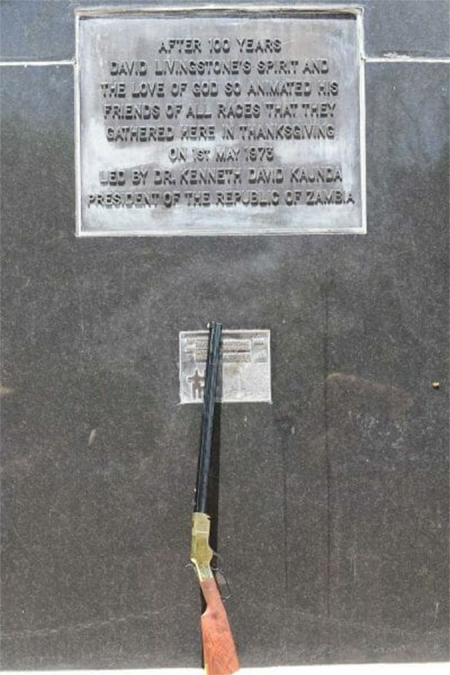
The current production New Original Henry was taken by PH Swanepoel to the site where Dr. Livingstone died and his heart was first buried before it was removed and returned to England. The HRAP plan was for a photo-op at the memorial site, some game hunting with the rifle and then donate the rifle to the Livingstone Museum, unfortunately only the photo-op happening.
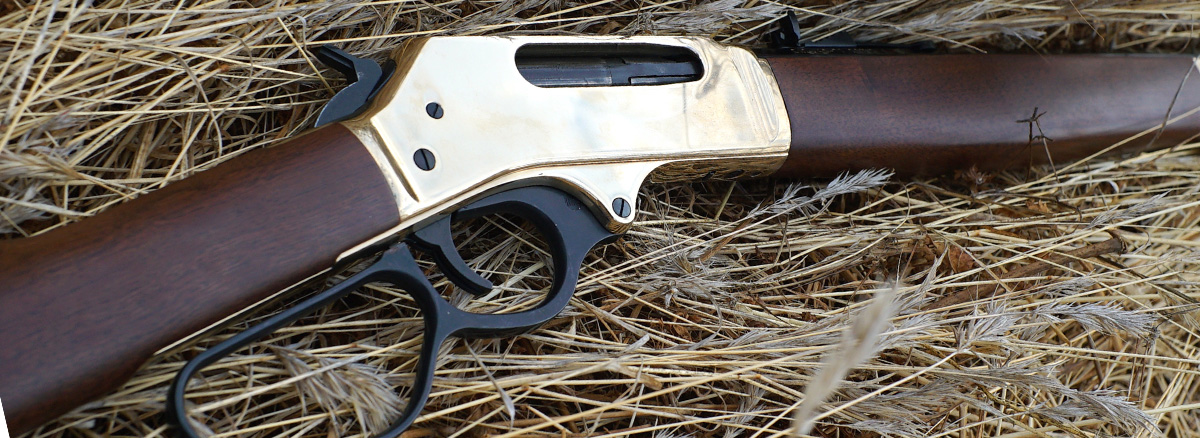
PH Swanepoel moved his hunting safari northeast to the Mpika area in the Muchinga Mountains and to 30,000 acres of land that Safaribwana had acquired. This was land that had been previously set aside for a railroad and so, supposedly there had been no hunting (legal that is) for years on this land. PH Swanepoel and his Safaribwana crew were shocked by the lack of game, but it became ever apparent, very quickly why the game was so scarce–poaching, dreaded scorched earth African poaching.
Shortly after setting up their base camp the gunshots started. Poachers who had been too long unchecked by game enforcement laws were in
PH Swanepoel’s very presence, killing anything that moved, to smoke on campfires to create bushmeat.
A game animal that might cost a foreign hunter a $1000 to buy a hunting tag was being shot with a homemade muzzleloading rifle, smoked in unsanitary conditions and then rushed out to the local community roads and sold for pennies on the dollar as bushmeat to the pedestrian traffic walking by.
The trees on the Safaribwana land were being illegally cut down and turned into charcoal. When the poachers realized PH Swanepoel and his crew, to include game enforcement rangers were present in the area they started bush ground fires with the attempt to destroy the base camp of PH Swanepoel. I assume, with the goal that PH Swanepoel and his group would be scared off. Instead, Pete Sawanepoel used his own vehicles, fuel, and man-hours to assist the game rangers in transporting captured poachers and driving them back to law enforcement incarceration facilities.
There was little to hunt, so when the truck with the “when the hunting was bad” painted bumper went by their vehicles at the end of the trip, is was sadly apropos.
Now a Zambian poacher would not think of stealing a cow and smoking it into bush meat. Cattle in Zambia have real value, you steal a cow and you go to jail and/or pay large fines. So everyone understands the value of a cow, but few care about value of a wild animal. When you see a picture of a poached elephant it is because there is no value to that elephant beyond it tusks and the bushmeat it can be turned into.
If you put a 10 or 20 thousand dollar hunting permit price on it, the animal becomes valuable. Foreign hunters will not only pay the price the state-run hunting listening system requires, they will spend big money, in hard currency to pay for a great hunting experience. An elephant hunt could bring in $35-$40,000 to the country and the local area. That money would spread around to the community and create jobs.
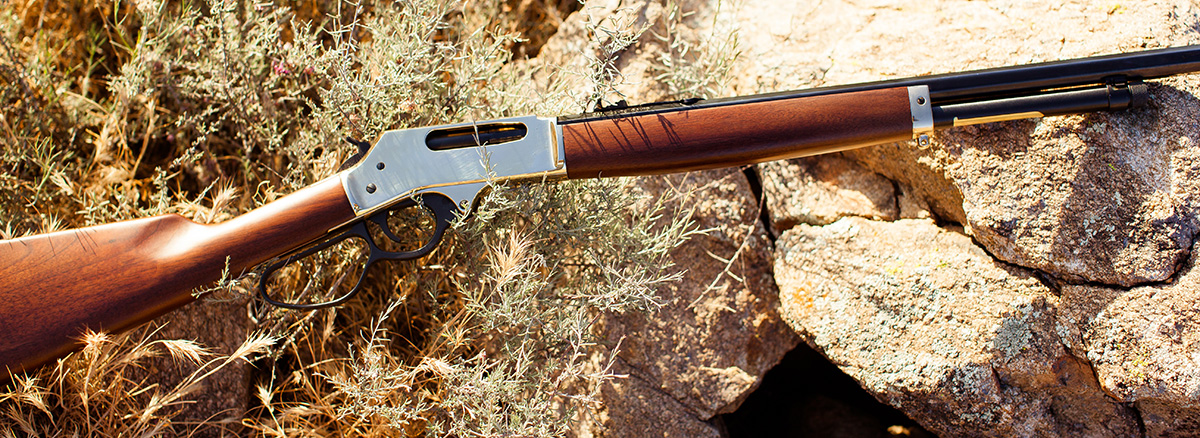
Killing an elephant that has no international value is just bushmeat.
In the US it is the 11 percent excise tax on firearms and ammo that pays for the conservation of wildlife in this country.
Whitetail deer have value in Wisconsin, the second home of Henry Repeating Rifles. Value, for that deer means a state-sanctioned legal hunting season is working for the benefit of the hunters and the support industry. Conservation occurs, financial profit is raised and a quality deer season is generated because of controlled and managed hunting.
Create a marketable value on anything, defend and protect that value through lawful means and people will want to protect that valuable item. Whether it is a home, an education, a human or a wild game animal.
Systematic, pervasive corruption devalues and in some cases completely destroys something that once had understood value. If that valued item is a living thing and it is hunted into scarcity its immediate value is lost. However, the long-term effect is an even more costly loss when reasonable manageable controls fail to occur due to corruption and deliberate criminal neglect.
The right people, the right Henry rifles and the right ammunition went to Zambia to have a positive effect on both past history and the future financial benefits of legal hunting, and both the past and the future suffered.
This is not the end of the story, but it is the end of a sad chapter.
There will be another attempt to get the Livingstone-Henry rifle to the Livingstone Museum. There will be other efforts to get control of the poaching of under-valued wild animals. In the meantime there is still a loss and the question is how large will that loss be.
For now, we simply must deal with “when the hunting is bad.”
 Written by Major Van Harl USAF Ret.
This article was first published on Ammoland.com
Major Van E. Harl USAF Ret., a career Police Officer in the U.S. Air Force was born in Burlington, Iowa, USA, in 1955. He was the Deputy Chief of police at two Air Force Bases and the Commander of Law Enforcement Operations at another. He is a graduate of the U.S. Army Infantry School. A retired Colorado Ranger and currently is an Auxiliary Police Officer with the Cudahy PD in Milwaukee County, WI. He believes “evil hates organization.”
 Let’s hit the ground running on this. I posed the question, and I’ll give you the answer: yes, there most distinctly is a place in today’s modern world for the lever-action rifle.
I grew up in a time and place where the levergun was king. It rode in a saddle scabbard, it rode in the pickup, it ruled the deer camp, and in the form of the ubiquitous Winchester Model 92 it also rode the range in the hands of silver screen cowboys, good and bad, for several decades.
The levergun was the Everyman’s Rifle. It had over a century of proven reliability, it did the job if you did yours, ammunition was available at every small-town Mom & Pop store in the state, the action was simple to operate, the rifle (typically a carbine) was trim to carry in hand, on foot, and through the brush, and it was affordable.
All of that, if nothing else, establishes the lever-action’s heritage as America’s rifle. But wait- there’s more.
Besides The Nostalgic Factor
The levergun today is selling in far greater numbers than ever, and there has to be a reason for those numbers. With manufacture going on in such far-flung locales as Brazil, Italy and Japan, not to mention domestic production, there are easily seven brand names immediately recognizable to the average rifle aficionado that are currently building leverguns, and you can’t blame all of that on sheer nostalgia.
For a good part of the last 25 years, the Cowboy Action Shooting sport was probably the main driving force behind the popularity of that class of firearms usually lumped in together loosely as “cowboy guns”. Here, with average membership running to more participants on the plus side of 40 years in age than the minus side, nostalgia very definitely was a factor. But, since CAS has peaked, we can’t lay the entire appeal of the levergun on that demographic.
There’s very simply got to be something more behind the enduring popularity of the levergun than fond memories of growing up either watching Grandpa hunt with his trusty .30-30, or watching old Westerns on the little screen. And it’s really not too hard to figure out what that “something more” is.
These things meet 7 important criteria.
They’re Dependable
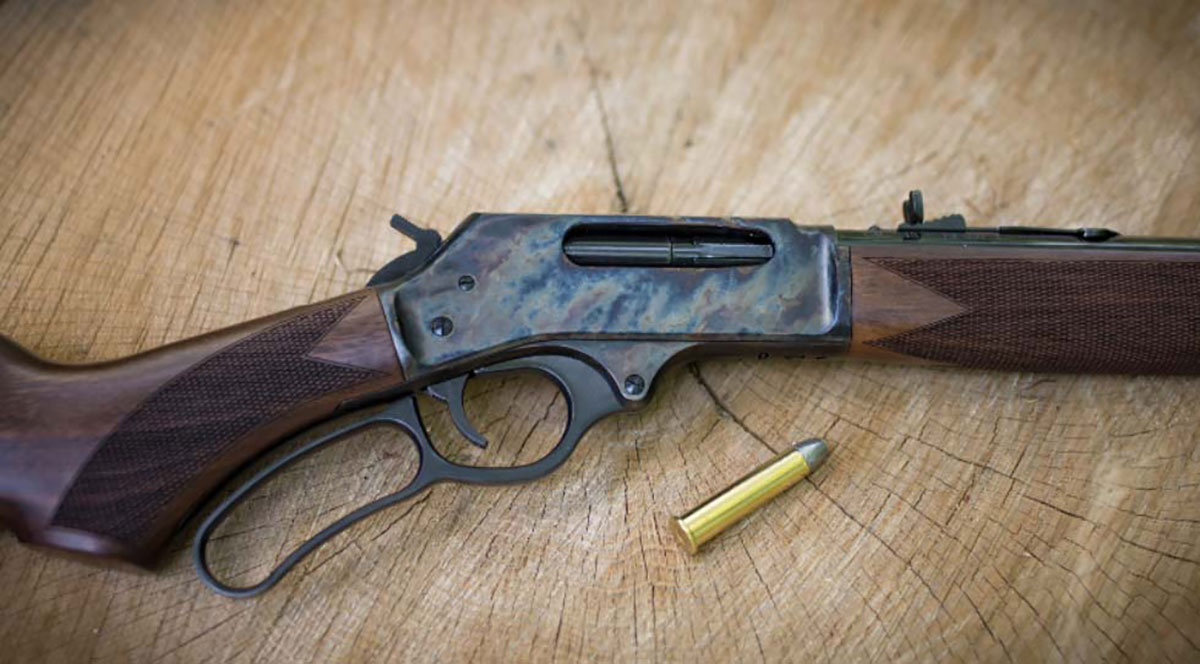
First off, anybody in the market for a rifle wants one that works.
There may be several different approaches as far as the guts go, but the lever-actions you see in the racks at your local gunshop are all either based on designs patented well over 100 years ago, or on more modern patterns that have still been around long enough to have proved themselves. Whether you buy a repro of a classic Winchester design, or a more recent levergun model that has totally different insides, odds are greatly in your favor that it’s going to do what you need it to do. The basic operating idea is not complicated, and neither is the actual operation.
They’re Easy To Learn
Tube-loader, side-loader, detachable mag loader, top eject, or side eject, they all boil down to the same simple lever-crankin’ method. Whichever way you load ‘em, you work that lever the same way. Swivel it open to cock or eject, swivel it shut to chamber and fire; and that also holds the same regardless of which way the gun ejects. The side events may vary, but the main event is pretty much a constant from brand to brand and type to type. You learn how to run one levergun quickly and efficiently, and it tends to transfer over to a different make or model quite easily.
They’re A Natural
There’s something about running a lever-action that seems to be more intuitive than a bolt-action, with less monkey-motion for the hand involved. When you cycle one, it’s a fore & aft in-line movement with the strong hand. You start out with that hand in a firing position, you shove it straight forward, you bring it straight to the rear, and you’re right back where you started, in a firing position. With a bolt-action, you remove your hand from the firing position, slip it up onto the side of the rifle, engage the bolt handle, rotate it 90 degrees to unlock, shove it forward, haul it back, rotate the handle down 90 degrees to lock the bolt, and then return your hand down to the firing position again.
They Can Be FAST!
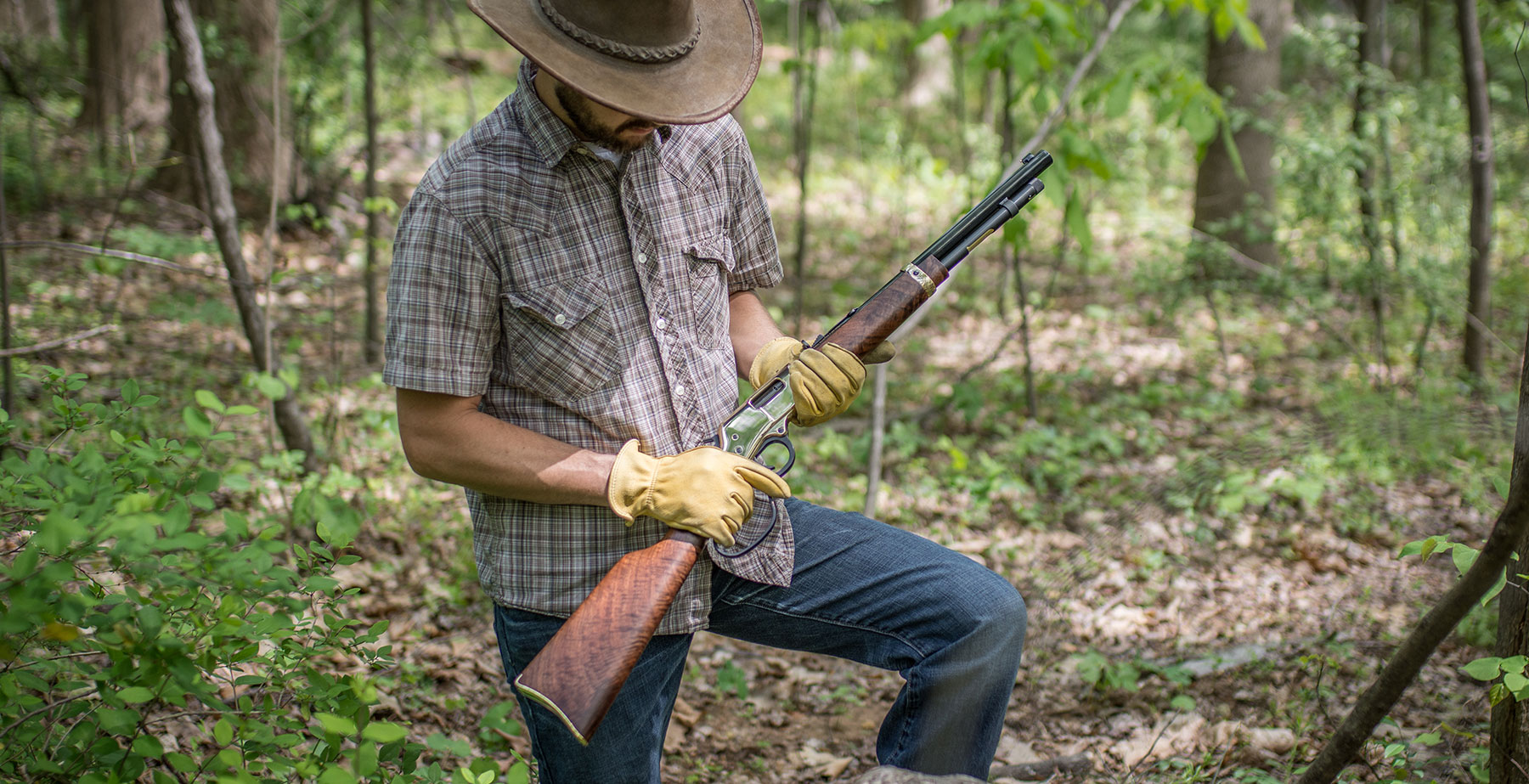
Largely, see above. With fewer directions the strong hand has to move in, a good levergunner can pull off some serious speed, as the CAS crowd has so clearly demonstrated. Yes, a good boltgunner is no slouch, but the two designs differ so much in their mechanical approach that the levergun is just more efficient in terms of fewer motions equaling less shot-to-shot time.
Whether this is important to you or not varies with what you acquire a lever-action to do. For rimfire plinking, it’s a bonus in keeping that soda can bouncing energetically. For centerfire hunting, not so much. For defense against a charging bear, much. I’d infinitely prefer a .45-70 levergun to a .30-06 boltgun in that spot; and I’ve carried one in large-claw country for several years. I have a .30-06, and I can run one, but the levergun involves less of a fumble factor under stress, and more confidence, for me.
Yeah, I know- there are dozens of semi-autos out there if speed’s all you’re looking for, but a good levergun can soldier on through conditions that’d send many of those semi-autos scampering for a clean bath and a warm place in front of the fire.
They Can Be Quite Versatile
Interesting to note, in passing, that you can find a lever-action rifle in over 20 different mainstream calibers, running from the lowly 50-yard .22 Long Rifle bunny-buster on up to the 600-yard .30-06 elk-eliminator. Want a bone-crusher? Take your pick- the “ancient” .45-70 in a long cartridge, or the young upstart .500 Smith & Wesson in a short round. Brush gun for whitetail or muleys? The venerable .30-30’s well-represented. Commonality with a bolt-action? The .308 Winchester’s do-able in a lever-action. Commonality with a pet revolver? You can find a metric bundle of makes & models that can match your favorite hogleg in .32s, .357s, .44s, and .45s, without even breathing hard.
They Can Hold More
This, of course, is model-specific with the levergun, and I’m not talking about competing with a hi-cap 30-round detachable mag-fed semi-auto rifle. But, compared to the bolt-actions in common use, where most of those may be able to fit 5 in their fixed magazine and one in the chamber, most leverguns will accommodate at least 10 in a handgun caliber (and up to 14, depending on model), or 8 rounds of a centerfire rifle caliber.
Again, this may or may not matter to you, but it does to me. I prefer having more rounds available before I have to reload, it’s just that simple and it doesn’t matter if it’s for hunting or defense.
They’re Just Flat Fun
Hand a new shooter a bolt-action rifle, have him or her blow off a few rounds. Hand that person a lever-action, in the same caliber, same deal. My money says that if the caliber’s not heavy enough to eliminate the fun factor entirely and the reach isn’t too long, they’ll tell you they prefer the levergun. This is a virtual guarantee in a rimfire plinker. You get more grins per mile with a lever-action than you will with any other manually-operated rifle design.
And, speaking of new shooters, the levergun makes a great learning tool. The action has to be manually manipulated for each shot, making it easier to keep track of both the shooter’s movements and the gun’s loaded status, and a single glance at the hammer tells everybody instantly whether the rifle’s cocked or not. Can’t say that about either the bolt-action or the semi-auto. The lever-action, in my opinion, is a much superior way to teach a newbie safe handling and shooting practices.
Wrapping It Up
I may possibly be just the slightest bit biased, but overall, the levergun’s my top rifle preference. If you don’t already know why, don’t take my word for it; get your hands on one and you’ll find out what I’m talking about. My favorite recreational rifle happens to be the Henry Repeating Arms Golden Boy that I did a 28,000-round endurance run on, and it’s still going strong. I also haul a .45-70 levergun in the ATV on every outing in the wilds, because I know it’ll come through for me. By the way- circling on back to that nostalgia thing: there’s nothing whatever wrong with basing your buy strictly on tradition, or “’cause Grandpa had one.”
At the risk of being repetitive, the lever-action still very much has a place in modern society, and you don’t have to justify one to anybody.

Q. Share your first recollection of using a firearm. How old were you and who taught you how to shoot?
A. I certainly remember it! It was in the small, one-point range in the basement of my grandfather’s gun shop in lower Manhattan. The gunsmith said “Hey kid, let me teach you how to shoot.” I remember putting on the safety glasses and being slightly apprehensive about pulling the trigger. I was seven or eight years old.
Q. What does being American mean to you?
A. In short, it means freedom. I take great pride in being a citizen of the greatest country on the planet. I have al¬ways felt that I bled red, white and blue. I have been very fortunate to travel this country from sea to shining sea, and see many small towns and rural America. Doing things like visiting the Iowa State Fair, attending a ballgame at a small minor league baseball park, or driving the back roads of the Grand Tetons—it just gets my patriotic juices flowing.
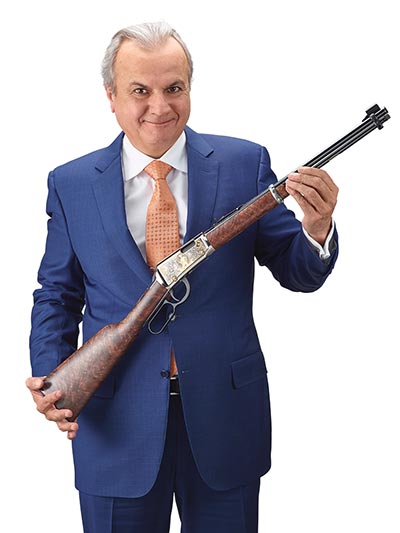 Q. When and how did you first become familiar with and involved with Friends of NRA and The NRA Foundation?
A. Henry started shipping guns in 1997, and I would say within two years or so we began working with Friends of NRA to supply firearms for fundraising efforts. It’s worth noting, however, that my grandfather’s gun shop has been around since 1911, so our roots with the NRA overall go way back.
Q. What motivates you in your role as a leader in your company and in the industry?
A. Earning respect every day and keeping our reputation motivates me. I want to be able to hang my hat high, and I want our employees to feel the same way.
Q. How has growing up in the firearms industry and as part of a family-owned business shaped you and shaped what Henry Repeating Arms is today?
A. It has completely shaped who I am and Henry Repeating Arms as a company. I was able to take experiences from every facet of the gun industry— retail, wholesale, export, manufacturing, etc.—and put them to good use when we resurrected the Henry name 20 years ago. Standing behind the gun counter was probably the most helpful, as that is where I was able to learn both sales and, more importantly, customer service. This is why Henry has a great reputation for exceptional customer service.
Q. Describe the most rewarding experience in your career.
A. Starting Henry’s Guns for Great Causes has been the most rewarding. We have a chance to give back to worthwhile causes such as individual cases of sick children, children’s hospitals, wounded first responders or families of those killed in the line of duty and veterans organizations, along with wildlife conservation and the Second Amendment.
Q. What has been the most humbling experience in your career?
A. Every year we honor veterans at the National NRA Foundation Banquet at NRA Annual Meetings. I have been able to meet the most incredible people: those who have risked their lives in extraordinary circumstances to protect our freedoms. From Louis Zamperini— the World War II veteran who survived 47 days at sea and torture yet retained the ability to forgive those who tortured him—and the 99-year-old veteran George Krakosky who survived Normandy to the 100-year-old veteran Edgar Harrel who survived the sinking of the Indianapolis and other Purple Heart and Medal of Honor recipients, I have been humbled to meet them all, to hear their stories and most importantly to honor them.
Q. What does Anthony Imperato do when he’s not working? Is “down time” in your vocabulary?
A. Not to pat myself on the back… but I will! [Laughs] It’s been two decades of going at it seven days a week. I just turned 60, and its time to smell some roses and take some down time. In addition, our management team at Henry can not only run things without me, but they can now improve on the foundation. My hobbies are food, wine, travel, politics, history, photography, sports and music. I try to fit in a bit of all of these things.
Q. What is the one question people ask you all the time?
A. What’s the best place to eat in New York City—and my favorite firearm.
Q. Tell us your favorite quote or life motto.
A. Here are more than one that you might find me using: “Don’t take the highs too high, or the lows too low.” And “One grain of sand at a time,” mean¬ing you are not going to build something great overnight—be prepared for the long haul if you want true success. Lastly, “Treat people better than they expect to be treated.” Enough said.
Q. What do you think is the most essential way to protect, share and pass on passion and support for the shooting sports lifestyle and our American freedoms?
A. I like to take a couple of youngsters or an adult who has never handled a firearm to a local outdoor range and make a fun morning out of it. We have breakfast at the range, teach firearms safety, do some shooting—at steel plates, balloons, soda cans, targets—and then go for pizza! It’s a great social experience that teaches discipline and appreciation of the shooting sports. These kinds of experiences will help pass it on.